Tracking Rhino Reproduction with Edible Glitter at Monarto Safari Park
In a surprising twist to conservation efforts, zookeepers at Monarto Safari Park in South Australia are employing edible glitter to monitor the fertility of their youngest southern white rhinos. The innovative method involves marking the rhinos' feces with glitter, making it easier to identify individual samples during hormonal testing.
For the first time, this technique is being applied to the park's two southern white rhinos, Carrie, aged seven, and Savannah, who is 15. As part of their routine, these rhinos are housed together in a spacious open-range environment and are fed colored glitter mixed into their lucerne hay. Ungulate supervisor Haidee Kinter explained that different colors—specifically blue and gold—were chosen for their visibility during sample collection from communal dung piles, colloquially known as "middens."
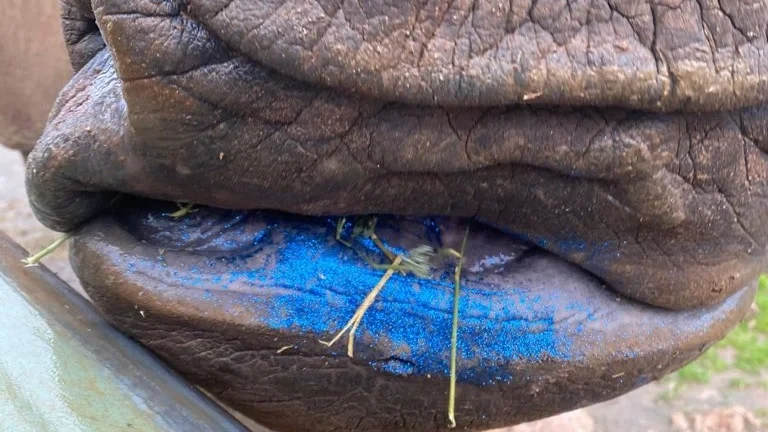
The practice of using glitter allows keepers to conduct thorough checks of different middens for those shimmering samples. According to Kinter, spotting the glitter is essential: "You have to make sure that when you open a beautiful big nugget of rhino poo that you can see these sparkly little bits of glitter easily," she said, highlighting its effectiveness. "Blue and gold have been the most successful so far."
Kinter mentioned that the rhinos enjoy the glittered hay as a treat, indicating how well they are acclimated to this unusual element of their diet. Beyond the novelty, this method serves a significant role in tracking the rhinos' hormonal changes, which fluctuate throughout their reproductive cycles.
Pregnancy Detection Through Fecal Analysis
The underlying goal of using glitter for fecal marking isn't merely aesthetic; it’s rooted in enhancing fertility monitoring. Traditional blood tests can detect pregnancy hormones late in the gestation period—sometimes not until six months in—but fecal sampling can potentially identify pregnancies earlier. "Sometimes there's a chance we could capture a pregnancy a little earlier if we're testing it in the fecal samples," Kinter explained. This early detection enables zookeepers to time the introduction of male rhinos for breeding purposes more effectively.
Monarto's glitter experiment follows successful precedents at other zoos, where fecal marking has helped track the health of animals like lions and polar bears. Notably, the park has collaborated with fertility specialists from Repromed to analyze these samples thoroughly.
A Journey Back in Time
This creative technique recalls earlier successful pregnancies at the park, particularly with older rhinos. Kinter noted that both Carrie and Savannah had been paired with other rhinos for breeding successfully in the past. In fact, their collective breeding history includes seven calves born since 2005, showcasing the park's commitment to fostering this vulnerable species, which has faced severe threats like poaching.
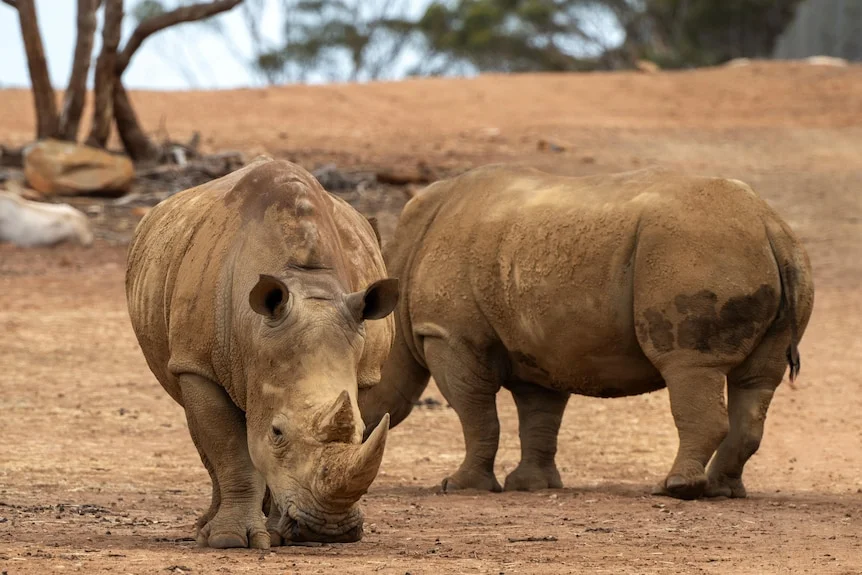
Southern white rhinos are classified as vulnerable, with around 18,000 remaining in protected areas and reserves, according to the World Wildlife Fund. In Australia, these rhinos serve as a kind of "insurance population," crucial for the species' long-term survival. Kinter emphasized the role of Monarto's six white rhinos in protecting the species against poaching threats that once led to the loss of thousands annually. She voiced hope that such creative wildlife management tactics will not only help the park but also contribute to broader conservation goals.
As of now, glittering solutions are unique to the rhinos, with no immediate plans for their application with other species at the park. "I think it's a brilliant example of the team being a bit creative when you’ve got a bit of a pickle," Kinter remarked, spotlighting the resourcefulness of wildlife management at Monarto Safari Park.