Nature as an Educational Tool
Imagine a classroom that stretches beyond four walls. That's exactly what the Greater Sydney Parklands' Bush School program is offering — an innovative approach to learning that transitions education from traditional settings to the great outdoors. This initiative isn't merely about fresh air and a change of scenery; it's about fostering a deeper connection with the environment and enhancing educational outcomes for young learners.
Led by PhD candidate Alexandra Harper, a recent study closely followed a Year 1 class from Middle Harbour Public School during 2024. Over ten weeks, these students spent two hours each week in the heart of Centennial Parklands, immersing themselves in nature while engaging in hands-on activities designed to stimulate both their minds and senses.
The research backing this program reveals compelling insights. Evidence suggests that engaging with nature can significantly enhance not just education, but also wellbeing and personal development. At Bush School, a group of 25 children participated in activities aimed at understanding native wildlife and the importance of environmental conservation. This study indicates that experiential learning in a natural context can drive real educational benefits.
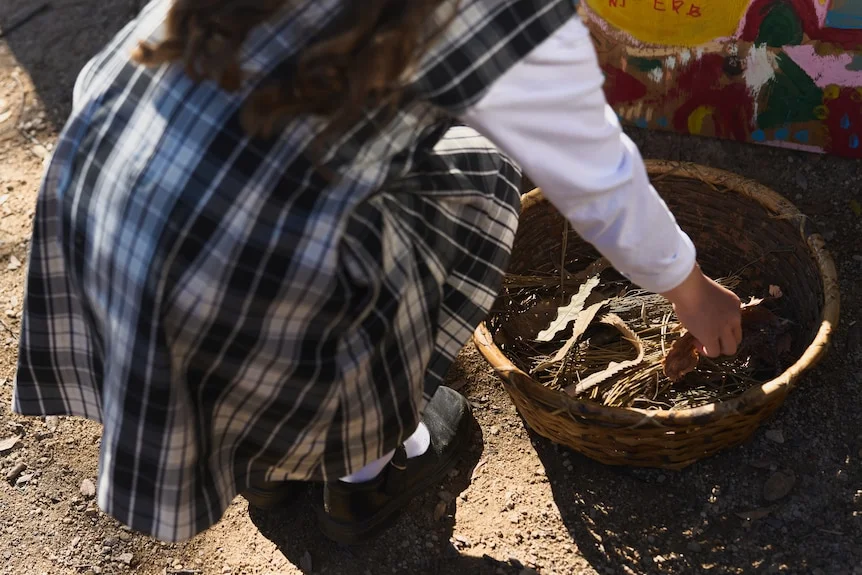
One remarkable finding was that some participants showed notable improvement in mathematics skills after their time outdoors. Professor Tonia Gray, who supervised this research and is a key figure at Western Sydney University, described this as "learning in, through, and about the environment in a natural setting." For many kids, this kind of activity resonates more than sitting in front of digital screens.
As Gray poignantly points out, "it doesn't take away from time-compressed teaching; it actually adds to the learning environment... it's like a catalyst for growth." If you’re in the educational field, this underscores the potential of alternative learning experiences that step outside conventional methods.
The children engaged in meaningful activities — from constructing stick cubbies to painting with ochre and even crafting poems that celebrated nature. Their reflections from these outdoor experiences reveal transformations in their attitudes toward learning and themselves. Nate, one of the participants now in Year 3, reported increased confidence in his physical abilities, particularly in activities like rock parkouring, suggesting that nature play not only nurtures academic skills but also personal growth.
In a time where educational frameworks are often scrutinized for their rigidity, Bush School serves as a shining example of how integrating nature into learning can spark joy and autonomy, equipping children with essential skills for both academic and life challenges. The implications of this approach could extend far beyond Sydney's parks, potentially reshaping how educators view the outdoor environment's role in childhood development.
Beyond the Classroom Walls
The insights from Middle Harbour Public School's Bush School initiative illuminate a critical shift in educational engagement. It's more than just outdoor play; it’s about redefining how students connect with their learning environment. Jenni Osborn, the school’s assistant principal, notes a remarkable transformation in the children—what started as reserved demeanor transitioned to students feeling truly at home in the wild. This shift is significant because it cements the outdoors not merely as a backdrop for education but as an integral part of the learning experience itself.
Parents, too, have observed substantial changes. The benefits extend beyond the academic realm; students are reportedly more engaged and enthusiastic about school. One parent, Andrew, highlighted the noticeable improvements in his son, Archie. The boy’s newfound joy in learning has translated into enhanced writing and drawing skills, driven by genuine interest. This kind of holistic growth is a testament to the effectiveness of experiential learning, advocating for broader implementation across educational systems.
What’s crucial here is the emphasis on indigenous knowledge—“children learn better on the land than in a box,” as Professor Gray articulated. This isn’t just a charming notion; it underscores a pedagogical approach that values lived experiences. However, for such initiatives to take root and flourish, teacher training programs need to adapt. Educators themselves must feel empowered to conduct lessons outside conventional settings, transforming old paradigms of education.
Merging Environmental Appreciation with Education
There’s a refreshing clarity in the connection made between environmental awareness and educational enrichment, demonstrated poignantly through activities like journaling and storytelling about their outdoor experiences. It fosters not just a knowledge transfer but an emotional bond with nature—a relationship that Rachel emphasized when discussing her daughter. By sharing what they've learned with their classmates, children are not just passive recipients of knowledge; they become active participants in a broader narrative about the environment.
The call for all schools in New South Wales to integrate outdoor learning experiences as standard practice cannot be overstated. We’re seeing a movement towards recognizing the unique challenges of Australian landscapes and the importance of fostering a greater understanding of them. Students like Hamish are not just learning; they’re thriving, showing interests in science and nature that might otherwise have remained unexplored within the confines of traditional classrooms.
As this model of education gains traction, it raises an obvious question: how can we scale such initiatives? Any reluctance to embrace outdoor education could miss the profound benefits outlined in this program. A curriculum that champions exploration as much as knowledge acquisition promises a richer, more engaged student body—a future generation that understands the vital connections between education and the environment.