Victoria Faces Scrutiny Over Wood Heater Pollution Amid Gas Policy Shifts
As Victoria pivots its energy policies with a focus on phasing out gas, clean-air advocates argue that the state government is neglecting the significant pollution generated by wood heaters. This issue is coming to light just ahead of the state elections in November, creating a vital conversation around air quality management.
Arabella Daniel, a resident with asthma, has been closely monitoring the air quality in her Melbourne rental for the past six years. She reports troubling levels of pollution affecting her home environment, particularly from nearby chimneys and outdoor fire pits. "I can’t open my windows and doors for fresh air many months of the year," she mentioned, underscoring the health impacts of local wood smoke.
To combat the intrusions of smoke, Daniel has installed multiple air purifiers throughout her 103-year-old home, attempting to improve her indoor air quality. Her efforts highlight an urgent need for the government to take serious measures against wood heater emissions, especially since the Victorian parliamentary inquiry on air pollution highlighted the dangers associated with wood smoke back in 2021.
The inquiry's report tabulated several recommendations aimed at mitigating wood heater pollution, including a proposed statewide awareness campaign and a potential rebate program to assist in phasing out such heaters. However, when the government finally released its response earlier this year, it was met with disappointment among advocates like Daniel, who felt the administration failed to address any of the crucial recommendations. "They didn’t address any of the recommendations of the inquiry,” she lamented, pointing to a lack of decisive action from policymakers.
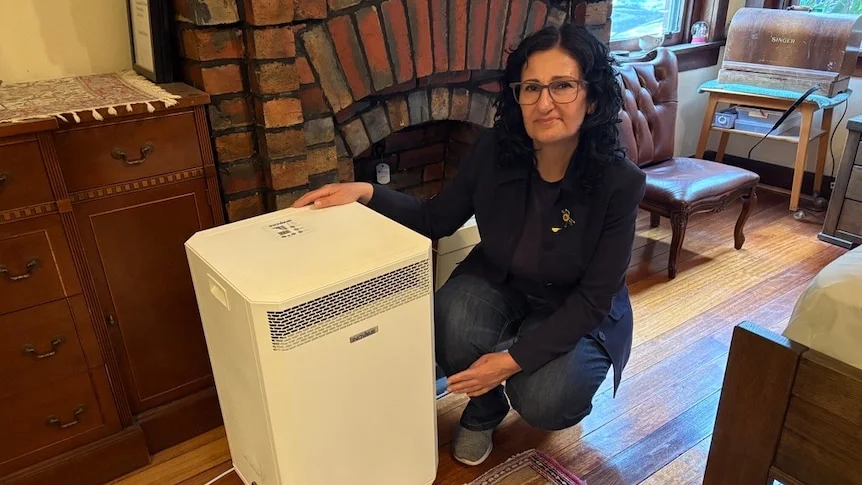
Arabella Daniel has installed multiple air purifiers in her home. (Supplied: Arabella Daniel)
The Victorian government had previously articulated intentions to take "strong action" on wood heater emissions through its 2022 Air Quality Strategy, citing substantial health costs linked to ongoing usage of the state’s approximately 240,000 wood heaters. Despite these proclamations, experts feel that the administration has failed to act, relying on outdated data from a decade ago regarding air pollution sources.
Wasted Opportunities and Frustrations
Doctors like Robert Phair have voiced their frustrations over the government's lack of progress managing wood heater pollution. He asserts that the dangers posed by wood smoke are comparable to those of cigarette smoke. "The Victorian government has wasted the time of a broad range of air pollution experts over the last decade," Phair stated, critiquing the absence of effective action on domestic wood heaters.

Rob Phair is a hospital-based doctor in East Gippsland. (Supplied: Rob Phair)
Despite calls for action, government representatives maintain that wood heaters remain vital for many, particularly in rural areas. Minister Jaclyn Symes assures that there are existing regulations aimed at improving the cleanliness and efficiency of wood heaters. Yet, as policy discussions evolve, it becomes clear that a more concerted effort is necessary to address the looming public health concerns posed by wood smoke.
Balanced Energy Solutions
With the looming requirement for all new homes and commercial buildings to shift towards electric solutions starting January 2027, the opposition's push to abolish the proposed gas ban further complicates discussions. This shift has sparked varying opinions, with some residents expressing satisfaction with their wood heaters as an efficient and cost-effective heating source.

Lynette and Richard Whereat love wood heaters. (ABC News: Erin Somerville)
For many, like Lynette and Richard Whereat from Wodonga, wood heaters not only provide warmth but also represent a cherished ritual of firewood collection and preparation. They prefer a diversified approach to energy use, favoring a mix of powers for their home heating and cooking needs.
With debates intensifying over the future of energy policies in Victoria, the government's response to wood heater pollution remains a pivotal topic. There’s a palpable sense that more proactive measures will be essential as environmental and health needs continue to collide in increasingly urbanized landscapes.