Love songs behind bars: what two rappers found inside youth detention
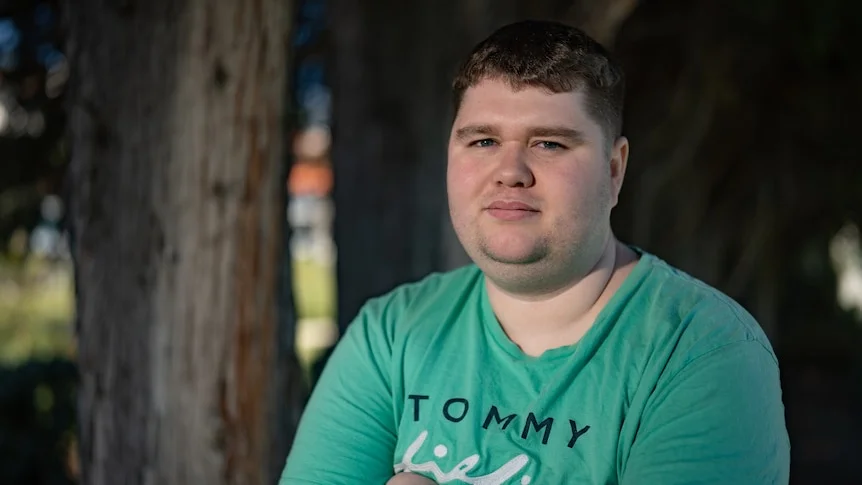
Kobie Dee knows how close a young person can come to the wrong side of the law, because he came close himself. "I was very fortunate that I didn't end up in jail," he told Double J's Michael Hing. Now the 29-year-old Gomeroi musician and award-winning rapper is spending his time on the other side of the wall, helping kids find a way out through songwriting.
Kobie recently spent weeks working on Hear Me Out, Music Behind Bars, a six-week songwriting pilot run by the Australian Children's Music Foundation for young people detained at the Cobham Youth Justice Centre. He was joined by Rhyan Clapham, a Filipino Murrawarri musician who performs as Dobby. Both believe few tools are as powerful, or as easy to pick up, as making music.
"We've seen the power of music play out again and again with young people," Dobby says. "It's a platform to express themselves, and it's also just making dope music."
Showing up as proof
Both men are Indigenous, and both take that seriously. Kobie points to how over-represented Indigenous young people are in these centres, and says it matters who walks through the door to run the sessions.
"So, to have other black fellas come in and be able to speak to stuff they can be working towards outside, showing them how to make music," he says. The young men in the room watched Dobby perform, and Kobie says it landed hard. "Those young fellas' minds were blown. To see that it's also accessible for them to be doing too, I think it's so important."
Dobby puts it more simply. "You've got to see it to be it. It's representation."
There's a second layer to that. A song is something a person can own. "When you create something that you can hold and say, 'That's my song,' it gives you a sense of pride and motivation to keep creating," Dobby says. "I think creativity cannot be taken seriously enough."
Making that work inside a detention centre takes a particular kind of room. The two rappers say the sessions had to feel safe enough for participants to tell their own stories, whatever form that took. "We're helping create a space in which they feel safe enough to share their story and bring it out in a musical way, whether it be rap, singing, playing the guitar or whatever," Dobby says.
He describes the payoff in terms of craft. "They're able to sharpen their sword and practise their skills and become a better musician. That should be afforded to anyone. It doesn't matter what situation you're in, or who you are. Music is a universal language, and we can all speak it."
Expecting drill, hearing love songs
Rap and prison have been tangled together for decades. Hip hop classics are full of references to jail, and to the choices that land people there. So the assumption going in was reasonable. Dobby admits he's biased, but he calls rap "one of the most influential forces" in young people's lives. "It's so direct," he says. "It helps tell their story."
He frames the genre as a counter-narrative, a way to push back on stereotypes. "Where racist stigma and stereotypes are put upon them, hip hop is a place where they can say, 'No, that's not me. This is my story, let me tell you the real side of what it is.' That's incredibly powerful."
Kobie came in expecting drill. He's run workshops in juvenile facilities in different states, and drill is usually what the kids want to make. This time, the room surprised him. "I walk in and they're singing a love song, and it was beautiful," he says. "This is the stuff that is on their minds already."
That's the detail worth sitting with. Rap wasn't the only sound participants reached for, and not every song came out of anger. Writing a love song takes a kind of openness that's hard for any teenager to reach, let alone one locked in a youth justice facility. The program's job, as Kobie sees it, is to give that openness somewhere to go. "To be able to provide a space where they can let that out like that, I think it's just so important that we're doing this for these young people."
Music also works as escape, though a brief one. Kobie describes it this way: "These young people are creating music and, for that moment that they're doing it, they're not confined by the walls that they're in. They're completely in the moment of creating and expressing themselves and speaking about things they probably wouldn't be speaking about in everyday life within these centres."
Realistic about the limits
Neither man is pretending a six-week pilot fixes anything. They know they won't reach everyone, and that some of the young people they work with won't carry the lessons out the gate. Kobie is blunt about the odds. "You could do workshops with 20 kids, and there might be only one kid that comes out with that thought."
He isn't discouraged by those numbers. He's betting on the ripple effect. "Changing that one kid is so powerful, because that one kid can then go on to start his own programs and save another five or six kids from that lifestyle."
That logic also explains why the pair think peers matter more than adults in this work. Both know that the people most influential in a child's life are often the ones closest in age and experience. A rapper who grew up in similar circumstances and made it out carries a credibility that a workshop facilitator in a lanyard can't easily match.
The message Kobie wants to leave with participants is about possibility, not a promise. "It's more about showing them what's possible and telling them, 'If you want this in your life, there are some things that need to change.' It's sowing those seeds."
The seeds are going into an industry the two men know well, and they see real openings there. Kobie's view is that the young people in these rooms don't need to be headline acts to matter in music. "It doesn't have to be being on stage or anything like that. They could even be doing what we're doing right now and teaching other young people music."
That's the forward-looking part of this story. The pilot's real test isn't the final recordings. It's whether the kids who wrote those love songs keep writing them once they're back outside, and whether one of them ends up in a room like this one, teaching the next group.