Catholic diocese tries to stop Trump’s border wall that ‘desecrates’ 29-foot tall Jesus statue
Catholic diocese tries to stop Trump’s border wall that ‘desecrates’ 29-foot tall Jesus statue
‘Nothing could be less Catholic’ than a ‘physical manifestation’ of the administration’s attitude toward migrants, lawyers say
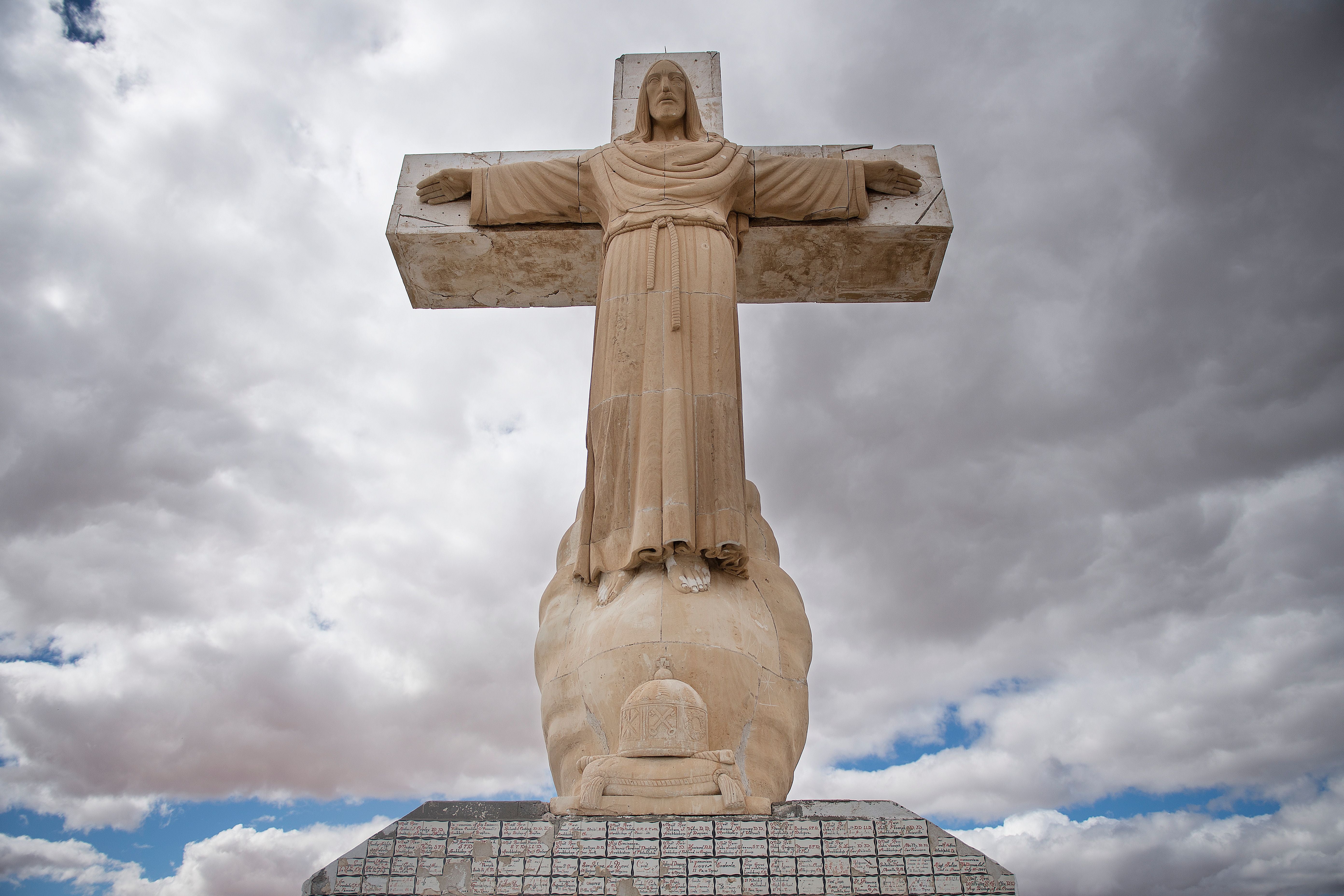
A Catholic diocese in New Mexico is waging a legal holy war against the Trump administration's plan to use 14 acres of church land for a new border wall — saying the plan would desecrate a 25-foot-tall, mountaintop statue of Jesus nearby.
In court papers filed Friday, lawyers for the Roman Catholic Diocese of Las Cruces said the church would fight the administration in court before it “surrenders even a square inch of its sacred land.”
“The law, including cases cited by the Government, is clear that the Diocese is allowed to present its defenses before the Government possesses and irreparably desecrates the holy site at Mount Cristo Rey,” they wrote. “This Court should not bless this affront to religious liberty.”
The court filing also called President Donald Trump’s U.S.-Mexico border wall a “physical manifestation of this Government’s attitude toward migrants,” adding that “nothing could be less Catholic.”
A spokesperson for the Department of Homeland Security, which is trying to seize the property through eminent domain, told The Independent on Sunday that “anyone who spent [30] seconds examining a map of Mount Cristo Rey and the southern border would realize how ludicrous these claims are.”
“Access to the shrine will not be affected, as all attendees enter from the U.S. side,” according to the statement. “The only individuals who could POSSIBLY be impacted by the border wall are illegal aliens attempting to illegally enter our country.”
The Justice Department, which is representing DHS in court, didn’t immediately respond to an inquiry from The Independent.
A spokesperson told The New York Times, which reported on the case Sunday, that seizing the land is “authorized by law” and “will not impact activity or use of the shrine” atop Mount Cristo Rey.
Last month, the government filed a lawsuit seeking authority to immediately take control of the land in Dona Ana County, near the border with Mexico, in exchange for a payment of about $183,000.
In response, the diocese argues that the proposed construction site would be “only one-quarter of a mile” from the top of the mountain and the 29-foot-tall limestone Jesus that stands there.
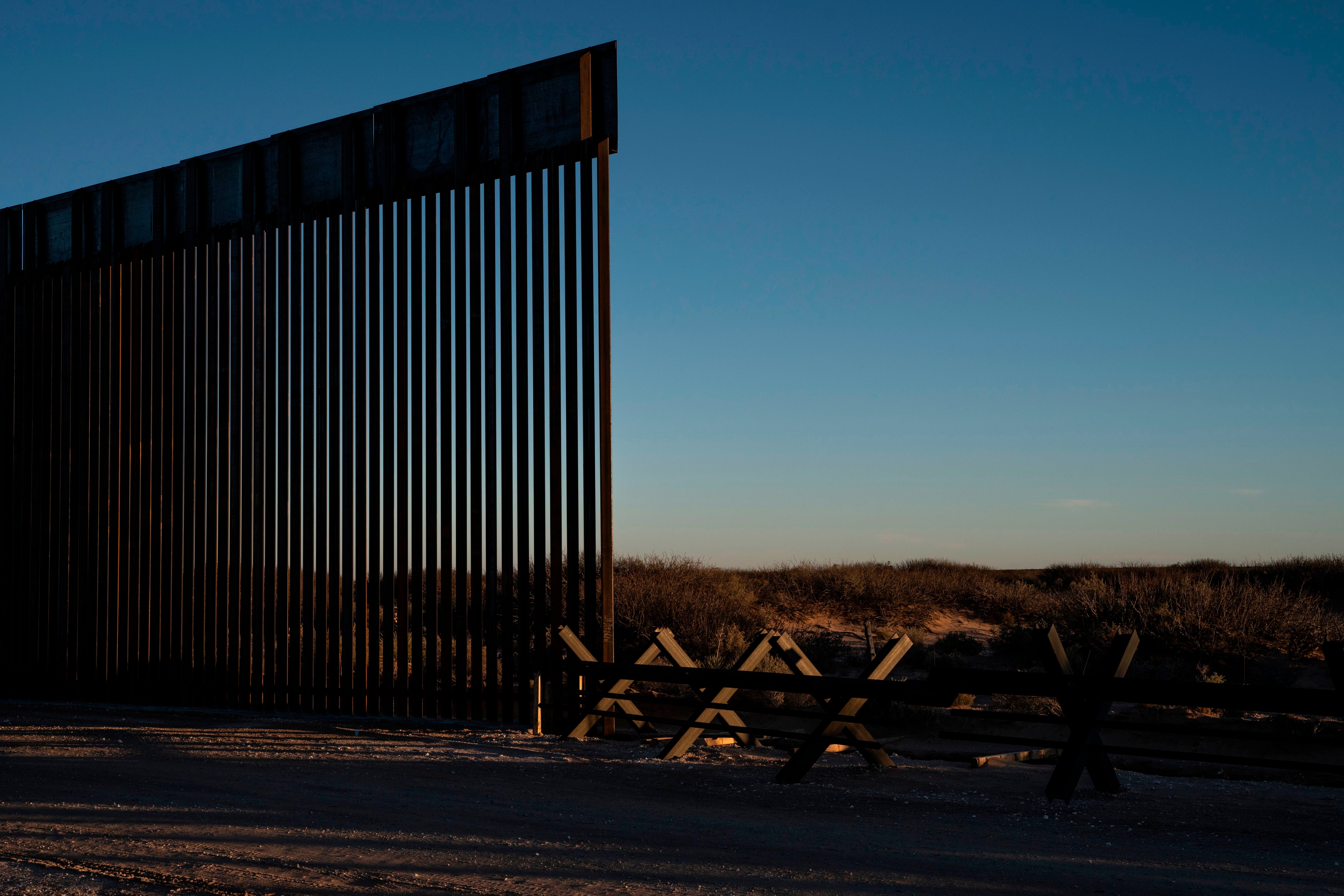
Building the wall, court papers say, would “deface” Mount Cristo Rey and “very likely will damage or restrict access to this sacred space.”
Deacon Jim Winder, chancellor of the diocese, told The Times that the battle wasn’t “between the church and the government; it’s a battle between symbols.”
“One is a 29-foot statue of Christ the King, which is meant to symbolize unity and hope, and the other is a 30-foot iron monstrosity that symbolizes exclusion and division,” he said. “Our symbol was there first. The wall is an in-your-face insult.”
The larger-than-life statue was erected after a local priest, the Rev. Lourdes Costa, came up with the idea in the early 1930s, according to The Times.
Costa shared his vision with the Diocese of El Paso in Texas, which bought the land from New Mexico. Hundreds of thousands of people have since made pilgrimages across rough terrain to the mountaintop since then, The Times said.
Lourdes Castañon, a 74-year-old volunteer with the Mount Cristo Rey Restoration Committee, told the newspaper that a border wall there “will look like a scar on Mother Earth.”
Another devotee, former police officer Ruben Escandon, said he opposed Trump’s stance on immigration but supported the government’s plan because surrounding segments of border wall were funneling migrants onto the mountain and creating safety concerns.
“It has nothing to do with immigration policies; it has to do with keeping Mount Cristo Rey safe,” he told The Times. “Hopefully it will allow the traditional visitor to come without fear.”
The Trump administration is waging other legal battles to continue construction of a border wall despite the government’s insistence that illegal crossings have plummeted. Homeland Security has waived dozens of environmental reviews that would typically be required to complete those projects in an effort to speed up construction, and Secretary Markwayne Mullin testified to members of Congress this month that a “primary” wall will be completed by mid-2027.
Join our commenting forum
Join thought-provoking conversations, follow other Independent readers and see their replies
Comments
Bookmark popover
Removed from bookmarks