Netanyahu's UN Speech Sparks Walkouts Amid Criticism of Israel
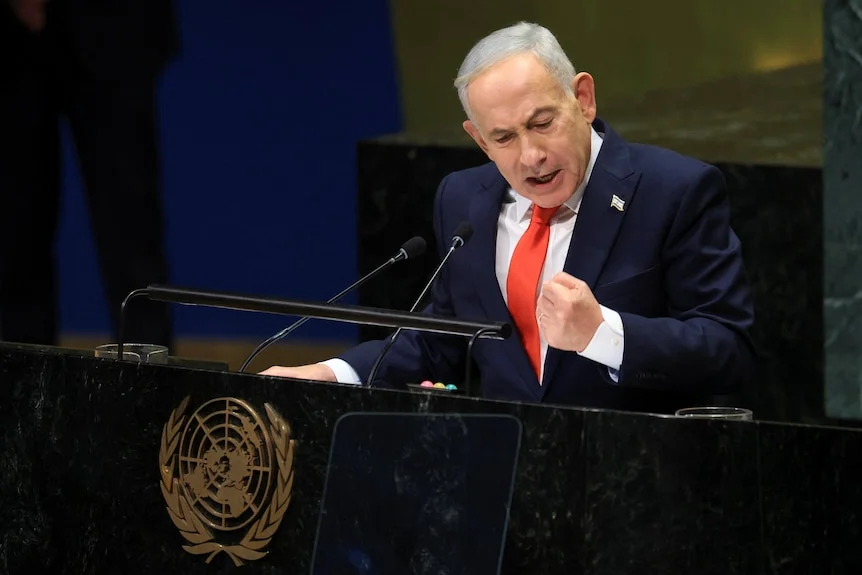
UN delegates staged a significant walkout during Benjamin Netanyahu's recent speech, where he vehemently defended Israel and praised former President Trump. The Israeli Prime Minister's address focused heavily on refuting allegations of genocide leveled against his country by various entities, including a UN-backed inquiry and notable human rights organizations. As tensions surrounding the Israeli-Palestinian conflict grow, Netanyahu's remarks reflect not just political maneuvering but a deeper struggle over narratives in international diplomacy.
Confronting Accusations
Netanyahu labeled these accusations as the "greatest lie of the century," directing particular scorn at New York Mayor Zohran Mamdani, who has referred to him as the "architect of horrific genocide." This illustrates a broader trend where leaders find themselves defending not just actions, but the very legitimacy of their state in the eyes of both domestic and international audiences. In this politically charged environment, words matter profoundly. The Israeli leader also faces an International Criminal Court warrant for alleged war crimes in Gaza, adding further complexity to his position on the global stage. This legal challenge complicates Netanyahu's narrative, making his assertions of innocence not just a matter of opinion, but one heavily scrutinized under international law.
Rallying Support Amid Isolation
His speech aimed to rally support at a time when Israel finds itself increasingly isolated internationally. This isolation is not merely a product of recent events; it’s a culmination of decades of complex geopolitical dynamics, shifting alliances, and increasing public opposition to Israeli actions in Palestine. Netanyahu did not shy away from calling out international leaders who supported these accusations, asserting that "many in the free world are afraid to defend freedom." This proclamation attempts to cast Israel as a lone defender of democratic values, a narrative that resonates with sections of his base but may ring hollow to others who view Israeli actions as antithetical to those same values.
Context of the Speech
The context of Netanyahu's speech was even more layered, given the ongoing violence in Gaza and increasing Israeli settler attacks against Palestinians. These issues have dominated discussions at the UN summit, with several European leaders even sanctioning Israeli settlements following a surge in settler violence in the West Bank. This backdrop of turmoil complicates Netanyahu's messaging and poses a crucial challenge for his administration, as he tries to justify actions that many in the international community view as provocations.
Military Necessity and Alliances
While Netanyahu declared that Israel had "no greater partner than President Trump," he acknowledged that their relationship has faced strain following joint military actions against Iran. The political calculus here is multifaceted. By emphasizing Israel's necessity for military responses, he aims to frame the dialogue around the idea that aggressive actions are essential for national survival. He stated, "if we hadn't done it, we'd all be dead," creating an atmosphere of urgency around security that often overshadows other concerns in international discussions.
The Future of Iranian Regime
During his address, Netanyahu projected confidence that the current Iranian regime would not withstand the test of time, predicting an eventual uprising. "The power of the people will overcome the people in power," he stated, despite lacking evidence to support this claim following months of conflict. This assertion reflects more than mere optimism; it embodies a deep-seated hope among some Israeli leaders that internal dissent will shift the Iranian landscape. But such ideation is often challenged by the realities of political repression and the complexities of Iranian society.
The Counter-Narrative from Abbas
Coincidentally, his speech followed a video address from Palestinian Authority President Mahmoud Abbas, who called for international efforts towards a two-state solution. Abbas, who was barred from attending the summit in person, criticized Israel for what he termed a "malicious colonial scheme" that undermines peace efforts. This sequence of events highlights the increasing polarization of narratives surrounding Israeli and Palestinian actions, where both leaders aim to position themselves as defenders of their respective populations while the international community grapples with how to respond effectively.
Impacts on International Relations
Netanyahu's combative approach at the UN continues a pattern of defiance against international scrutiny as he gears up for upcoming elections in Israel. The outcomes of these speeches may further influence perceptions of both Israeli leadership and international relations. The gravity of these rhetorical exchanges can’t be understated; they shape not just immediate political contexts but also long-term diplomatic relations, potentially impacting everything from trade sanctions to military aid.
What this means for you, the reader, is an opportunity to observe how narratives are crafted in the world of international diplomacy. These developments may filter down to local discussions and influence broader public opinion. And yet, as Netanyahu and leaders like Abbas push their respective agendas, the possibility of genuine dialogue seems increasingly distant. As such, keep an eye on how these tensions evolve; they could very well shape the geopolitical atmosphere for years to come.