Wildfires Undermine America’s Achievements in Reducing Ozone Pollution
The increasing severity and frequency of wildfires are reversing decades of progress in the fight against surface ozone pollution across the United States. Recent studies reveal a troubling trend: while emissions from vehicles and industry have been steadily declining due to tighter regulations, the escalating impacts of wildfires—particularly since 2015—are generating a significant rise in ozone levels. This shift not only highlights the vulnerabilities of existing air quality management strategies but also underscores an urgent public health crisis that demands immediate, comprehensive action.
The New Face of Ozone Pollution
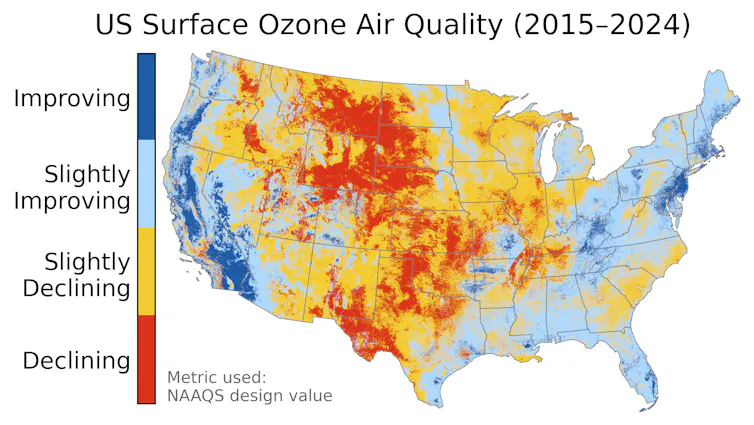
Surface ozone is often misunderstood; while it's beneficial in the upper atmosphere as a shield against UV radiation, at ground level it poses serious health risks, particularly for vulnerable populations. Historical data has shown a consistent decline in surface ozone levels in the U.S. following the Clean Air Act's implementation in the 1970s. This decline, charted consistently until 2015, is now inverted. Where ozone levels previously dropped by about 0.65 parts per billion annually, they have since increased by approximately 0.13 parts per billion. The uptick is a direct consequence of wildfire emissions, whose drastic rise has fundamentally altered the air quality landscape.
Data-Driven Insights About Ozone Levels
The shift in ozone levels was uncovered through an extensive analysis by atmospheric and wildfire scientists who examined data from 2003 to 2024. Using a combination of ground monitoring stations, satellite data, and advanced AI modeling, they generated a granular picture of daily surface ozone levels across the contiguous U.S. Their findings revealed that regions traditionally mitigating ozone pollution now face worsening air quality, with smoke and gases from wildfires contaminating urban environments far from their original sources.
In 2023, for instance, the reach of Canadian wildfires illustrated the breadth of this problem. Areas such as the Midwest and as far away as Georgia and New York saw ozone levels soar into unhealthy ranges. This environmental degradation affected millions of Americans, demonstrating how interconnected air quality is across geographic distances.
Public Health at Risk
The implications of rising ozone levels go beyond environmental degradation. Epidemiological data suggest that ozone-related premature deaths are rising at a concerning rate, with an estimated increase of about 300 deaths annually since 2015 due to elevated ozone associated with wildfire smoke. In light of these statistics, it's clear that the nexus between wildfire activity and air quality directly influences public health—a reality particularly pressing for areas facing the dual threats of wildfires and other sources of pollution.
Moreover, the situation is compounded by the expectation that wildfires will grow in frequency and intensity due to climate change. As temperatures rise, the conditions become ripe for extreme fire seasons, heralding even more spikes in ozone levels and additional health risks.
Strategic Responses Required
If you're working in public health or environmental policy, the need for a multifaceted response is clear. First, individuals can manage their exposure to ozone during wildfire seasons by staying updated on air quality forecasts and limiting outdoor activities when levels rise. However, individual actions alone won't suffice in addressing the root causes.
Tackling the ozone problem holistically requires a concerted effort to mitigate wildfire risks through enhanced management strategies. This could involve controlled burns, strategic clearing of dry underbrush, and implementing broader climate initiatives aimed at curbing fossil fuel dependency, thereby addressing global temperature rise. Protecting public health necessitates a robust air quality forecasting system, informing communities with timely data so they can take necessary precautions.
Moreover, reinforcing the existing air quality monitoring infrastructure and investing in satellite technologies provide opportunities to better track air pollution and alert authorities to emerging threats. This adaptive approach is essential not only to combat immediate spikes in ozone but also to facilitate longer-term reductions in ground-level pollution.

Looking Ahead
The challenges posed by increasing wildfire activity are redefining the air quality narrative in the U.S. and beyond. This stark reality urges a reevaluation of existing frameworks for managing air pollution. Rather than viewing wildfires as isolated incidents, they must be recognized as systemic risk factors that endanger public health, environmental quality, and community resilience. As the scientific community continues to unveil the scales of these issues, the call for decisive, coherent action grows louder—one that not only addresses today’s challenges but anticipates future crises.