Alcohol-Associated Hepatitis Rates Remain Elevated Among Young Australians
Dylan Allen turned 18 and celebrated the way plenty of young Australians do: with friends and a few beers. His mother, Rachel Allen, remembers it as harmless. "It was something that seemed completely harmless at the time," she said.

Dylan Allen tried to get help multiple times before his death. (Supplied: Rachel Allen)
Rachel Allen wasn't worried at first. Dylan had, as far as she knew, barely touched alcohol before that birthday. "I wasn't at all alarmed by this as Dylan had not touched alcohol as far as I knew up until this point."
Within about three months, that changed. Drinking became something that concerned his family. "He was drinking more than beer and in heavier, more dangerous amounts," Ms Allen said. "His entire personality began to change from then on."
Between the ages of 20 and 25, Dylan was admitted several times to both private and public rehabilitation programs. Ms Allen says those stints bought time but never solved the problem. Each admission offered temporary relief, not a way out.
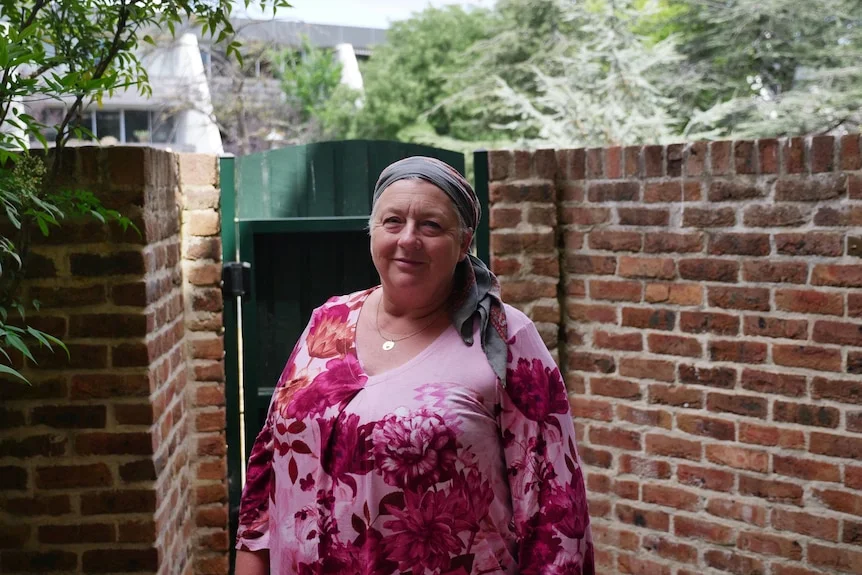
Rachel Allen says alcohol misuse is a multi-layered and complex issue. (Supplied: Rachel Allen)
Dylan died in 2022, aged 26, from alcohol-related liver disease. His story is one case, but the data behind it points to something broader, and it isn't encouraging.
A new report from the Burnet Institute, commissioned by the Foundation for Alcohol Research and Education (FARE), finds that diagnoses of alcohol-associated hepatitis have risen in recent years. That includes people in their 30s. The sharpest jump came in Victoria during the COVID-19 pandemic, and the rate has stayed elevated since.
Young Australians at high risk
Alcohol-related liver disease usually progresses through three stages:
- Fatty liver: too much fat builds up inside liver cells.
- Alcohol-associated hepatitis: swelling and damage in the liver caused by heavy drinking.
- Alcohol-related cirrhosis: severe disease in which the liver is extensively scarred.
The Burnet researchers examined hospitalisations in Victoria for alcohol-associated hepatitis between January 2017 and June 2024. They also found that roughly half of people with alcohol-related liver disease developed cirrhosis within six years. That's a sobering conversion rate for a condition many people still treat as a problem for later in life.
To see what the pandemic did, the team split the data into three periods: pre-pandemic (up to February 2020), during the pandemic (March 2020 to October 2021), and post-pandemic (from November 2021).
Lead author Jessica Howell, a gastroenterologist at St Vincent's Hospital and head of the Institute's hepatitis and liver cancer group, said hospital admissions rose "significantly" for both men and women during the pandemic.

Drinking is often seen as a social activity, but isolation during the pandemic led to higher drinking rates. (Getty Images: The Good Brigade)
Rates eased somewhat after the pandemic, but Professor Howell said they stayed above pre-pandemic levels. Young people, she said, have emerged as an at-risk group.
"Between 2017 and 2024, around 40 per cent of admissions for alcohol-associated hepatitis occurred in people under the age of 45," Professor Howell said. "Around 13 per cent end up in intensive care, and it has a 4 per cent mortality [rate]."
Jacob George, a liver research scientist at the University of Sydney who had no role in the study, wasn't surprised. "The COVID lockdowns, which were particularly severe in Victoria, clearly contributed [to alcohol consumption]," he said. "I suspect we would find similar effects across Australian states and territories."
Survey data suggests young people are drinking less than previous generations. Professor George argues that's only half the picture.
"A smaller number of people are also drinking more, including binge drinking, resulting in harmful alcohol consumption and its adverse consequences,"he said.
The report also found that people diagnosed with alcohol-related liver cancer in Victoria were younger than those with other forms of liver cancer.
There's a caveat. The study was retrospective, drawing on two Victorian patient databases. Professor George said a study that tracked patients over time would produce more reliable data.
Spotlight on harm for women
Here's the figure that should get attention: women now account for about one in three cases of alcohol-associated hepatitis in Victoria. Professor George called the finding "very concerning."
Professor Howell's working explanation centres on the pandemic. As hospitalisations among women began to climb, she theorised that many Victorian women were carrying a heavier load, often juggling paid work, home-schooling and other household responsibilities. That's a hypothesis, not a proven cause, and the report doesn't test it directly.
The gap in support is the part Professor Howell seemed most frustrated by. Even now, she said, there are "very few" services designed around the needs of women, especially those trying to manage their own health while caring for others.
The data also shows that women with alcohol-associated hepatitis were younger, more physically frail and more likely to need intensive care than men. Professor Howell pointed to biology as part of the reason. "Women have a smaller body mass, particularly muscle mass, than men and so the amount of alcohol that can lead to harm within the body is lower," she said.

Ayla Chorley says reducing alcohol use significantly reduces harm. (Supplied: FARE)
FARE chief executive Ayla Chorley pointed to a second shift: alcohol marketing aimed directly at women. "You've got, mummy wine nights and terminology which is effectively saying: 'This is a good way for you to de-stress and you deserve it,'" she said.
"And we're seeing alcohol consumption in women increase and we're also seeing alcohol-related harms in women increase."
Stigma a 'critical barrier' to care
Professor Howell's advice is blunt in its simplicity. Anyone worried about their drinking should see a GP, because early intervention can reduce harm. It's never too late to cut back, she added.
"We know that the liver can regenerate very well. We're very fortunate that at any stage, if people reduce their alcohol consumption, they can really see very, very positive health benefits."
She also suggested smaller changes can add up. Swapping every second drink for water, or eating while drinking, can make a meaningful difference.
Getting people to walk through the GP's door is the harder problem. Professor Howell noted that people who seek help often face stigma and discrimination, which she called a "critical barrier" to appropriate care.
Ms Allen knows that barrier well. She watched her son struggle to get the help he needed, and she believes better-coordinated, more compassionate care could have changed his outcome.
"He also often went to the GP with me and even though he presented as extremely unwell, he was basically not treated with dignity and respect," she said.
"Wherever he is, I know that the mental torment he went through while he was here is now over and that he can finally rest. This is the one and only thing that brings us peace."