Philippines' Carmelle Collado Takes First Eurovision Asia Crown
The Philippines now holds the first-ever Eurovision Asia trophy, and the winner is a 19-year-old who was the youngest contestant in the room. Carmelle Allyza San Juan Collado took the crown in Bangkok. The result is a good story on its own, but the more useful question is whether a contest built on Europe's model can build a real audience in Asia, or whether this first night was mostly spectacle.
Contestants from 11 countries competed. Fans flew in from across the world to watch. The event had plenty of energy, but the inaugural edition didn't attract the same fan following that the European contest enjoys, and that gap is the story underneath the sparkle.
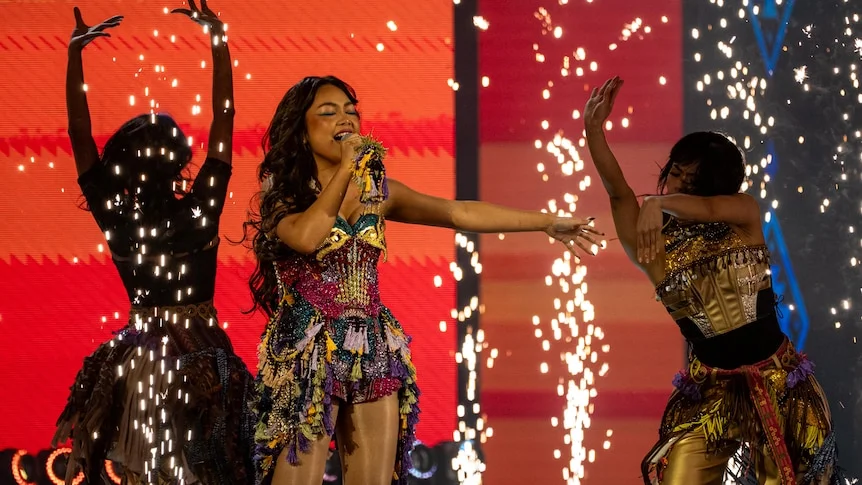
A winner from a family of singers
Collado won with "Sobra-Sobra," an original song she said was inspired by the strength of Philippine women. She performed it with a high-voltage stage presence that clearly landed with the judges and the crowd.
"I'm really happy. I'm really grateful that I made history," Collado said.
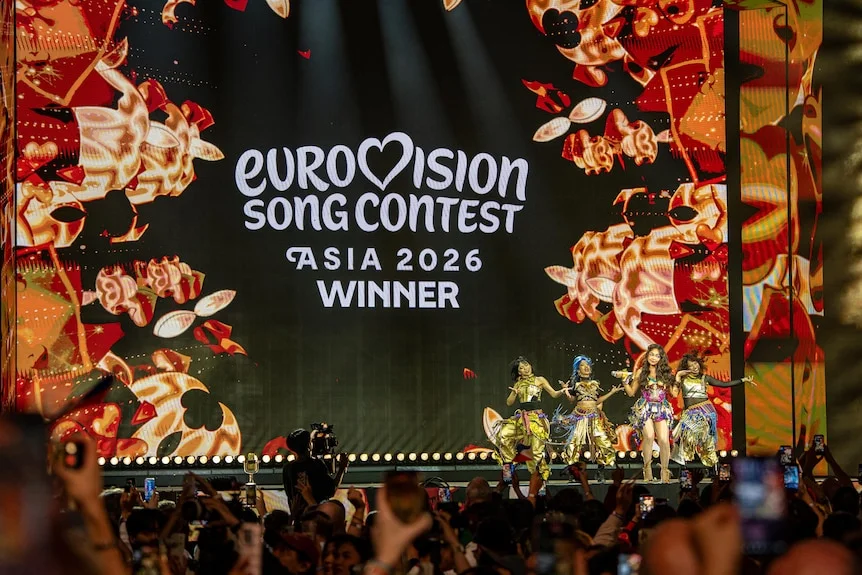
The Bicol native comes from a family of entertainers. She's already a recognisable name at home, having won the Tawag ng Tanghalan singing competition, appeared on Pinoy Big Brother, and released a self-titled album this year. That's a lot of visibility for someone who was still a teenager when the contest started.
"I got singing from my mother's side," she said. "My mother sang, my grandmother sang, and also my grandfather. My uncles and aunties, my cousins, they all sang."

Her ambitions for the stage go past the trophy. "I hope that I can leave audiences with a deep sense of connection and I hope I can make them understand that the Filipino music is universally relatable."
A smaller field, and a thinner crowd
Seventy years after Eurovision was created to help unite a war-torn Europe through music, the franchise has moved into Asia. The original contest is the world's longest-running international music competition, known for its songs, its spectacle and its unapologetic glamour. More than 130 million viewers tuned in to the Vienna contest in May.
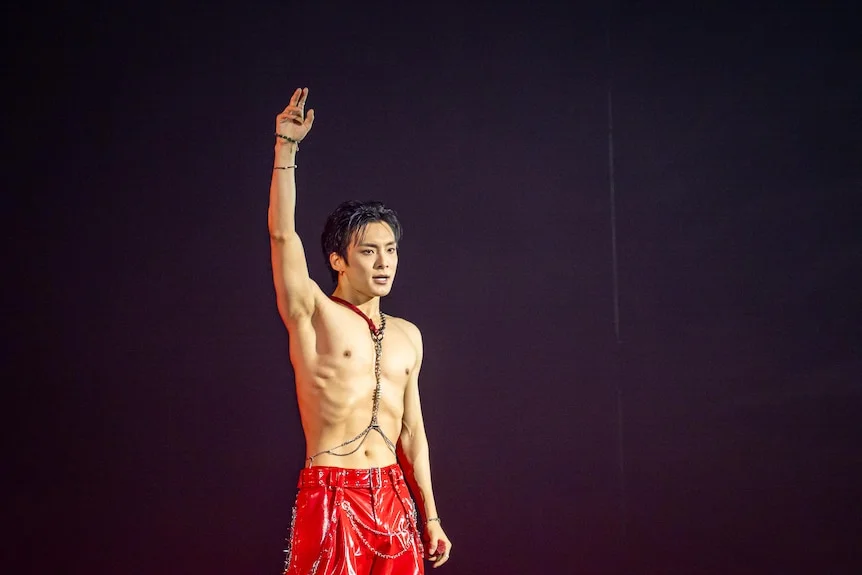
Asia's version doesn't come close to that reach, at least not yet. Some of the region's biggest and most influential nations, including India, China and Japan, were notably absent. Instead, performers from Bhutan, Bangladesh, Cambodia, Laos, Malaysia, Mongolia, Nepal, the Philippines, South Korea, Thailand and Vietnam competed for the votes and hearts of viewers. That's a real start, but the missing names matter. Without the region's largest markets, it's hard to call this a continental contest yet.

What the event lacked in anticipation, it made up for in visual ambition. Colourful tuktuks rolled onto the stage, the visual effects were eye-catching, and the costumes were the kind you remember long after the final note. If the production is the pitch, it's a strong one.
Some of the fans made the same case with their wallets. Adam Bryers and Lalla Stewart, dressed in matching sparkling silver outfits, flew from Perth to watch the show.

"We love Eurovision and we have Eurovision parties in Perth in our house and also with our friends," Bryers said. "The glam, the fun, the music, the silliness — it's a really great festival. I think it really suits the culture here, especially in places like the Philippines, so it will do well."
Ran Macanang came from the Philippines and had followed the original competition for a decade. He pointed to a fan base that already exists at home. "There are thousands of fans in the Philippines for Eurovision already, so knowing that Eurovision is finally coming to Asia, everyone is excited that finally someone from the Philippines can show the world our talents," he said, waving his nation's flag.
"Asia has what it takes to be as colourful as the main Eurovision in Europe."
The enthusiasm is real, but the incentives are modest. This year's winner gets no prize money and doesn't automatically earn the right to host the next competition. For a contest that runs on national pride, that's a notable absence.
The road to Eurovision Asia
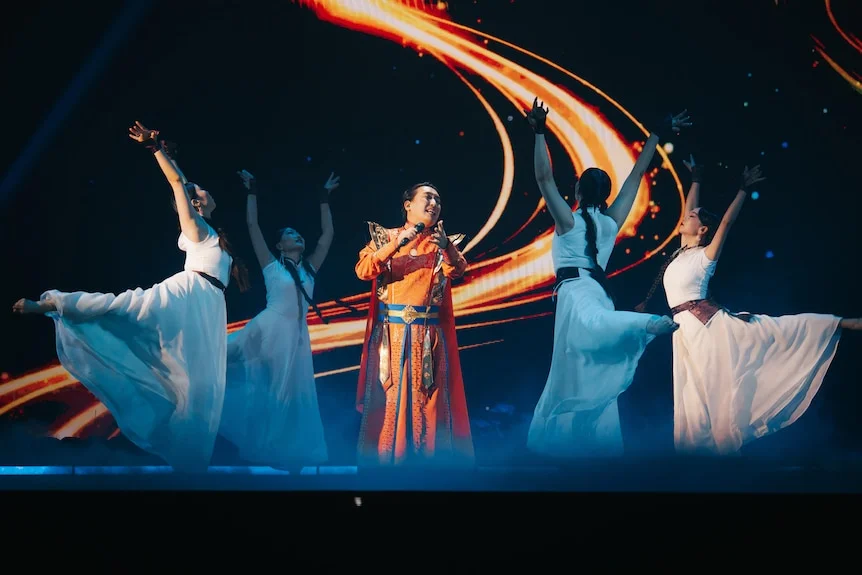
Behind the lights and choreography, the path to the stage was long for many performers, and for some it was painful.
Thinla's started in the rice paddies of south-western Laos, where she grew up singing and dancing while her parents worked the land. Performing wasn't a passion project. It was a way out. "I started dancing because at the time I just wanted to make money to support my family," the 29-year-old said. "It's not easy."
The economics explain why. In a country where 15 per cent of the population lives below the poverty line, according to the Asian Development Bank, building a career as an entertainer is a difficult bet.

Despite the challenges and the upheaval caused by the COVID-19 pandemic, Thinla secured a scholarship to study in China.
The personal stories behind this year's contestants carry more weight than any trophy. Take the singer from Laos. She returned home full of plans, and shortly afterward she lost the person who believed in her most: her father.
"I hope he can see me growing up like this, and can see me perform, because he loved it when I sang and performed for him." She was fighting back tears as she said it, and it's hard to hear that and treat the performance as just another stage.
Nepal's Pratik Himal Rai faced a different kind of pressure. He wasn't only carrying his own ambitions onto that stage. He was carrying his family's hopes, and those of a country still grieving.
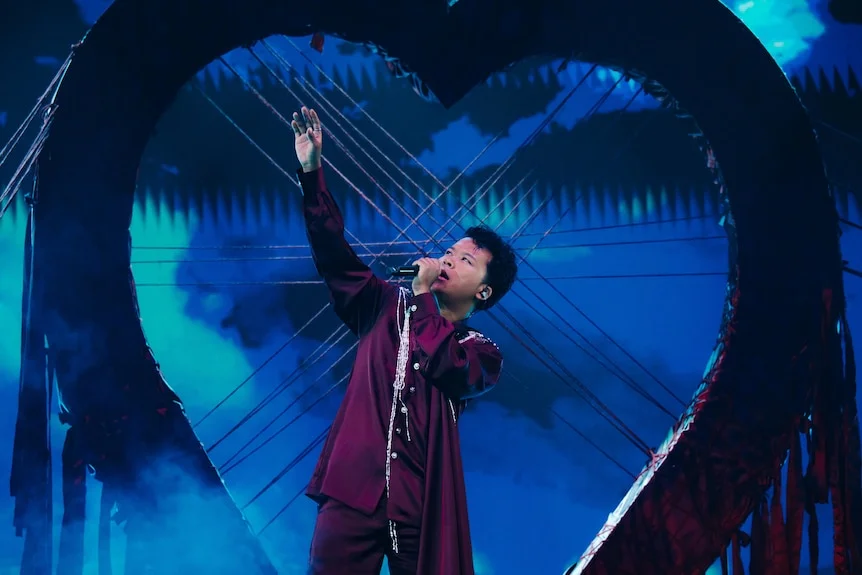
Pratik Himal Rai represented Nepal in the competition. (Supplied: Eurovision Song Contest Asia)
The grief is recent and it's enormous. In August, flash floods tore through communities along the Bhotekoshi and Trishuli rivers, near the border between Nepal and Tibet. At least 1,400 people died. More than 5,700 are still missing, and among them are close relatives of Rai's friends. That's not an abstract statistic for him. It's the people he grew up with.
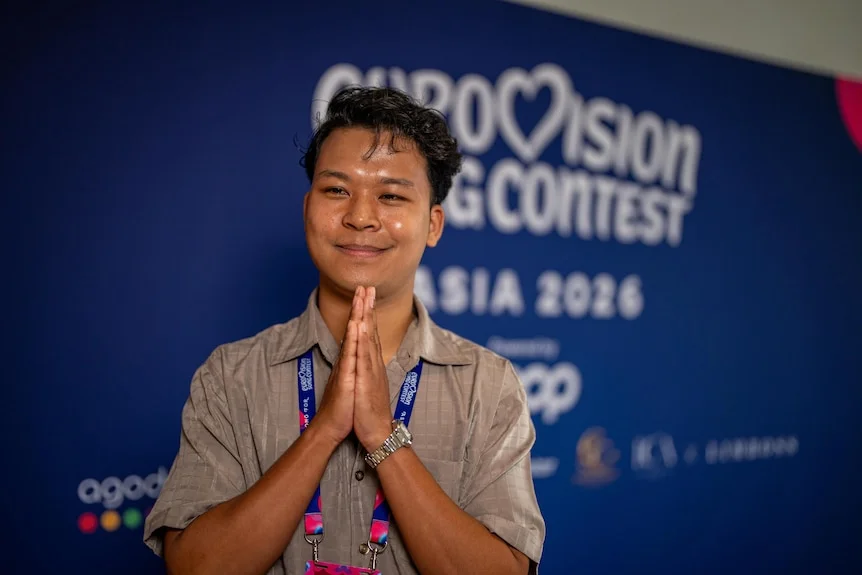
He said he felt a great sense of responsibility. (ABC: Haidarr Jones)
"My message for the world is that love is eternal. To all the lives that we have lost in the floods, we have lost them, but their love for us is still there," he said.
A tough field and a shaky launch

Eurovision has embarked on an ambitious new chapter in Asia. (Supplied: Eurovision Song Contest Asia)
Ambition is easy to pitch. Execution is harder. Eurovision Asia's launch drew scrutiny over why the competition exists in this form and whether audiences actually wanted it, and the organisation didn't escape questions of its own. Those doubts didn't come out of nowhere.
The broadcaster has been here before. Its 2022 attempt to break into the American market fell flat, drawing weak viewing figures while competing against established shows like American Idol. If you've watched a format fail to find its audience once, you don't get to assume the second attempt will go better.
Which raises the obvious question: is Asia different? The early signs are mixed. Eurovision Asia has made a tentative start in its push to win over the region's music fans, and it's hard to call that a breakthrough yet.
And yet the upside is real. Asia's music scene runs from K-pop to indie, with heritage and talent across dozens of countries. If the competition can turn that range into a reason to tune in, the audience is there to be won. Whether it does the work to earn it is the question to watch.