Madi Hoffman's Levi Eighth Is Australia's Best World Cup Slalom Result Since 1999
Madi Hoffman's eighth place in the slalom at Levi, Finland, is the kind of result that resets an athlete's season. It's also Australia's best World Cup finish in almost three decades, and she earned it from bib 57. That combination is what makes this more significant than it looks at first glance.
The 26-year-old Sydney skier posted her first career World Cup top 10 at the season opener. The last Australian to finish this high was Olympic bronze medallist Zali Steggall, who placed eighth at Serre Chevalier in 1999. Steggall won two World Cup podiums, at Park City, Utah, in 1997 and again in 1998, and she finished her career with 11 top 10s. Hoffman now has one, with a long way to go to match that tally.
Here's the thing: a single top 10 is easy to dismiss as a good day. Plenty of skiers have one strong race and never repeat it. What makes Levi harder to write off is the context around it, namely a start position that should have made eighth close to impossible for most of the field.
Starting late changes the math
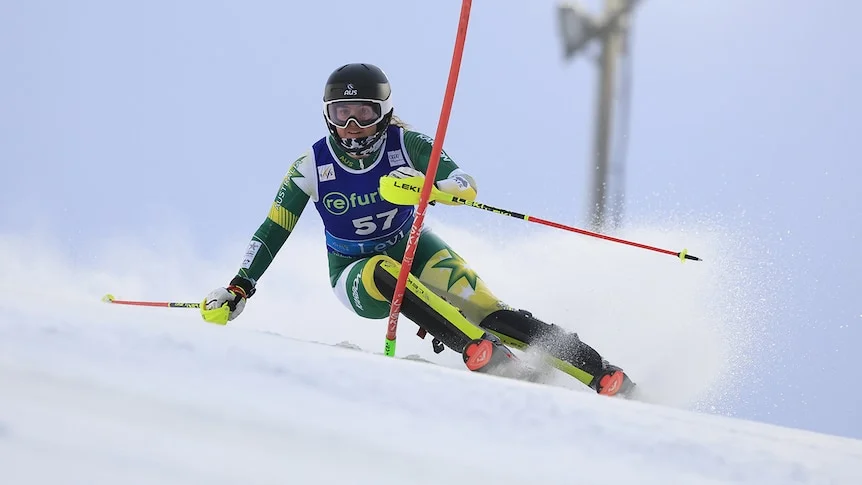
Bib 57 meant 56 skiers had already carved the course before her. In slalom, that matters more than outsiders tend to realise. Every run cuts channels into the snow, and skiers further down the start list have to find a fresh line through the gates. The top three finishers, Emma Aicher, Lara Colturi and Katharina Truppe, wore bibs 1, 2 and 3. Seven of the top 10 wore single-digit bibs.
Think about what that does to a racer's head. Early starters ski on a surface that's still firm and mostly untouched, while late starters are reading ruts, washed-out turns and gate lines that have been scraped by dozens of runs. Many skiers in that position either overcorrect and fight the snow or play it safe and lose time everywhere. The data from this race doesn't tell us which path Hoffman considered, but her results suggest she avoided both traps.
Hoffman still posted the 13th-fastest first run and then went faster on the second. She was the lowest-ranked starter to make the second run, which was limited to the fastest 30 from the first. That's the part that stands out to me. Hoffman didn't force it on a course that was already chewed up, and that restraint is harder to teach than raw speed.
Here's how she explained her approach: "In the first run I chose to trust myself and not try to do anything more or anything less than training," she said. "In the second run I thought I'd try to give it a little bit more oomph, but it was the same stuff, trying not to do anything crazy on race day, just normal skiing." That's a skier describing discipline, not luck, and it's a useful reminder that the sport often rewards the athlete who stays boring.
Setbacks in the rearview
This result didn't come easily. Hoffman spent lengthy spells off the snow after ACL injuries in 2022 and 2024, and she finished 23rd in the slalom at the Milano-Cortina Olympics. Her reaction to Levi was measured.
Knee injuries of this type are rarely a quick fix. Rehabilitation usually involves months of strength work and gradual reintroduction to load before an athlete can trust the joint at race speed, and the mental side often lags behind the physical. Skiers coming back from these injuries frequently describe a hesitation that doesn't show up on a rehab checklist. Whether Hoffman still carries any of that is something she didn't address directly, and it's worth keeping in mind when reading her results from here.
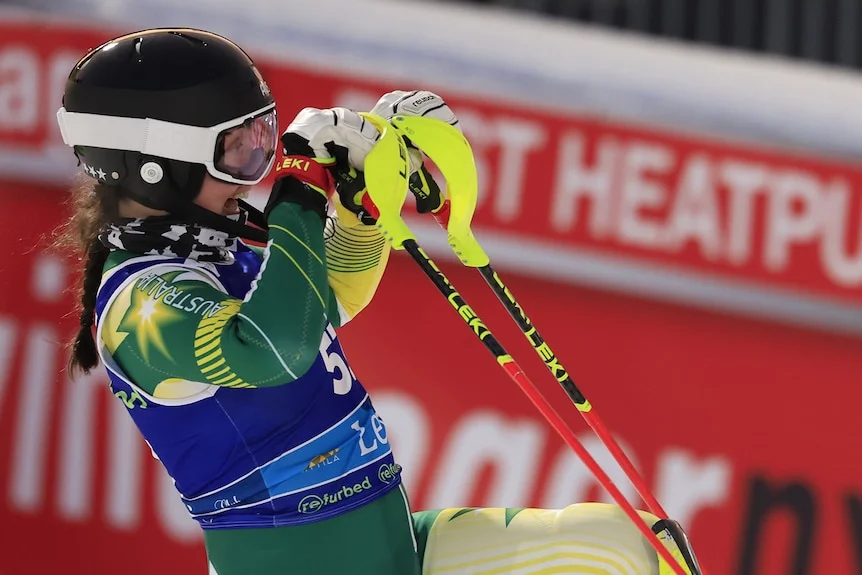
"It hasn't hit me yet, but I'm definitely proud, especially after a long slog with some injuries," she told the Olympic Winter Institute of Australia. "Tearing both my knees in 2024 and coming back last year, it feels good to be back racing." Notice that she didn't frame the eighth-place finish as a triumph over adversity. She framed it as getting back to the start gate, which is a more honest and more useful way to measure a comeback.
Where Australian alpine skiing goes from here
Freestyle has carried Australia's winter results for years, with multiple medals in moguls, aerials, and park and pipe. Alpine and nordic skiing have been a much harder nut to crack. The gap isn't surprising once you look at what alpine development demands: consistent access to snow, sustained coaching investment, and enough international racing to build tactical experience. Those things are expensive and slow to pay off, which is why results like this one carry more weight than a single medal in a more established discipline.
Phoebe Heaydon, also a Milano-Cortina Olympian, finished 31st, 0.12 outside the cut-off. It was still a lifetime World Cup best for the 21-year-old. (And this is the part most people overlook: missing the second run by that margin is a close call, but it's also a sign that the depth behind Hoffman is improving.) Heaydon's result matters because a program with one strong racer is fragile, while a program with two is starting to look like a system.
Two Australians knocking on the top 30 door is a different story from one good day. Hoffman's run suggests the road to the French Alps in 2030 and Utah in 2034 goes through the alpine program, not around it. That said, Olympic cycles are long, and the gap between a strong World Cup week and a medal-contending season is wide. Plenty of promising results have faded once the competition tightened, so the real question is whether this form holds across a full season.
What Levi actually tells us
I'd call Levi a proof of concept rather than a breakthrough. Eighth from bib 57 shows that Hoffman can ski with the field's best when conditions are unkind, and that's a skill that doesn't always come back after a serious knee injury. The number that matters most isn't the placing, though. It's the 13th-fastest first run from a difficult start position, because that's the figure that holds up when the draw is less kind.
If you're following Australian skiing, the practical takeaway is simple. Watch the next few races for consistency rather than headlines. A single top 10 can be a fluke, but three or four results in the same range would start to change how the team is judged, both by rivals and by the sport's funding conversations. Here's where I'd push back on the enthusiasm, though: the sport has a habit of rewarding early-season peaks that don't last, and skiers with long injury histories have a harder time sustaining them.
The next test comes at Gurgl in Austria next weekend, and that course will show whether Levi was a peak or a platform. Gurgl is a different hill with different demands, and a repeat result there would tell us far more than Levi did. Hoffman's eighth place is a good story. Whether it becomes a good season is still an open question.