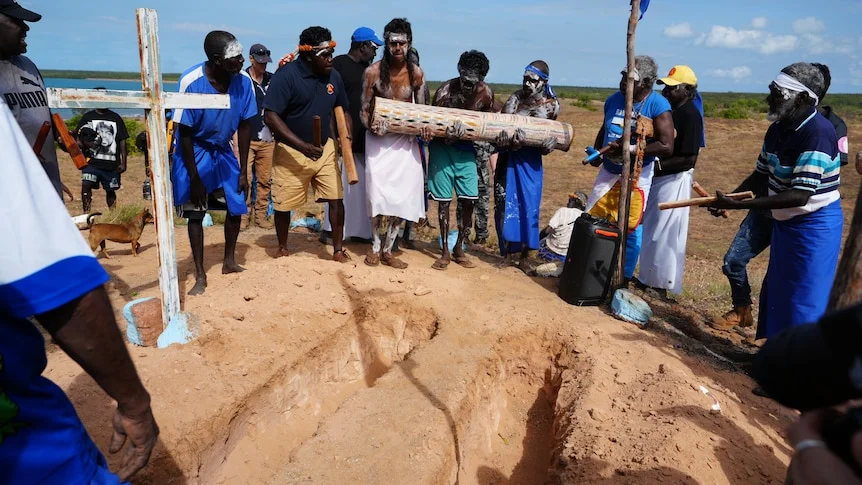
At a site steeped in tradition in Arnhem Land, nine Yolŋu ancestors have been laid to rest, marking a significant repatriation ceremony intended to address the historical injustices of the past.
Decades ago, these remains were removed from the Northern Territory by anthropologist Donald Thomson, who worked with the University of Melbourne. His actions resulted in the ancestors being imprisoned in a collection in Victoria for approximately 85 to 90 years, until new research finally bridged the gap back to their traditional homeland.
In a heartfelt ceremony held near Blue Mud Bay, community members gathered to honor the return of their ancestors. The remains were placed inside larrakitj (traditional log coffins) and then interred atop a hill, accompanied by ceremonial songs that welcomed them back home.
Ceremony of Remembrance
Leading the ceremony was Djambawa Marawili, a respected Maḏarrpa clan leader and artist who has fought tirelessly for the repatriation. He expressed how important this moment is for the Yolŋu community, stating, "We need to show our young ones, so they know some of our ancestral heritage was taken away."
"We can bring our ancestors back through the same song cycles and ceremonies of our forefathers."
These remarks carry weight because they underscore a shared resolve within the community to educate the next generation about their heritage. The act of bringing back the ancestors is less about the physical remains and more about restoring cultural identity and continuity. In a context where Indigenous identity has often been challenged, this rebirth of ancestral ties offers hope.
Melbourne University’s involvement highlights a broader commitment to reconciliation. Professor Marcia Langton, a prominent advocate for the repatriation movement, was present and emphasized that items of heritage were never meant to be removed from their rightful places. This acknowledgment isn't just a formality; it's a necessary recognition of the historical traumas faced by Indigenous peoples.
Glyn Davis, the interim vice-chancellor of Melbourne University, reinforced the university's duty to address past wrongs, urging other institutions around the world to join in this urgent call for repatriation. The university's efforts aim to resolve its complex history of handling Aboriginal remains and sacred items. This seeks to amplify the message: the return of cultural heritage is not just a local issue but a global one that requires collective responsibility.
As this important movement gains traction, just last week, fourteen ancestors were returned to various clans in North-East Arnhem Land, building momentum towards a reparative future. The timeline for future repatriations is uncertain, and yet, the push for justice appears to be gaining strength.
Broader Implications
The repatriation of these ancestors underscores a pivotal chapter in the ongoing reconciliation process between Indigenous populations and institutions that have historically marginalized them. It's a call for accountability and a recognition of the deep ties that Aboriginal peoples have to their land and heritage. For anyone involved in cultural heritage work, this represents a critical juncture that demands attention and action.
Future Outlook: Beyond Repatriation
While the ceremony for the Yolŋu ancestors was an emotional and necessary step, the question remains: what lies ahead for the repatriation movement? Repatriating remains is an important start, but the journey toward healing is multifaceted. Institutions must now focus on comprehensive strategies that involve education, community engagement, and a re-evaluation of historical narratives. If you're working in this space, you'll recognize that addressing past injustices means changing the very framework through which history is taught and understood.
Restoration of culture doesn’t end with physical remains. Repatriation is a step towards a larger goal of solidarity and respect for Indigenous knowledge systems. Institutions like Melbourne University can play a pivotal role in this journey by remaining committed to partnerships with Indigenous communities. This acknowledgment often gets lost in the shuffle. Acknowledging past wrongs isn't enough; it must be accompanied by actionable change, and this is where the repatriation conversation can expand to encompass richer dialogues about cultural heritage.