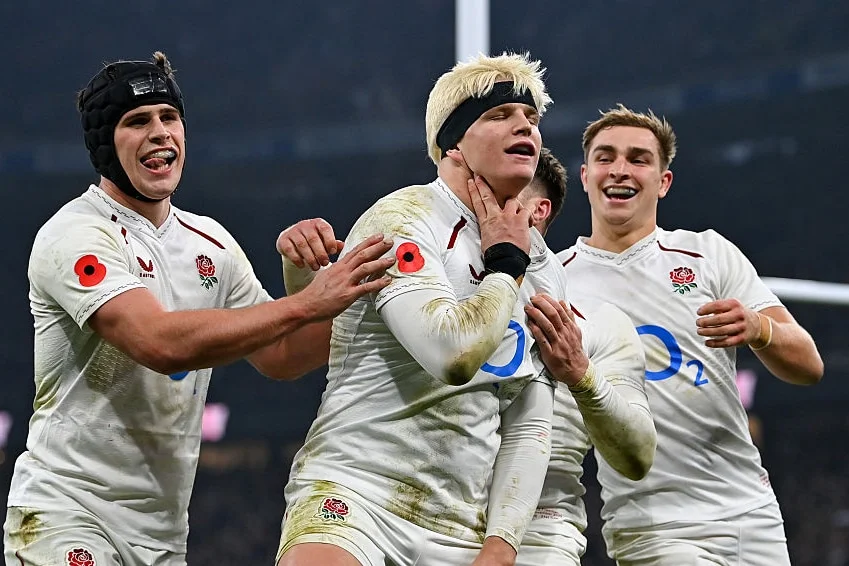
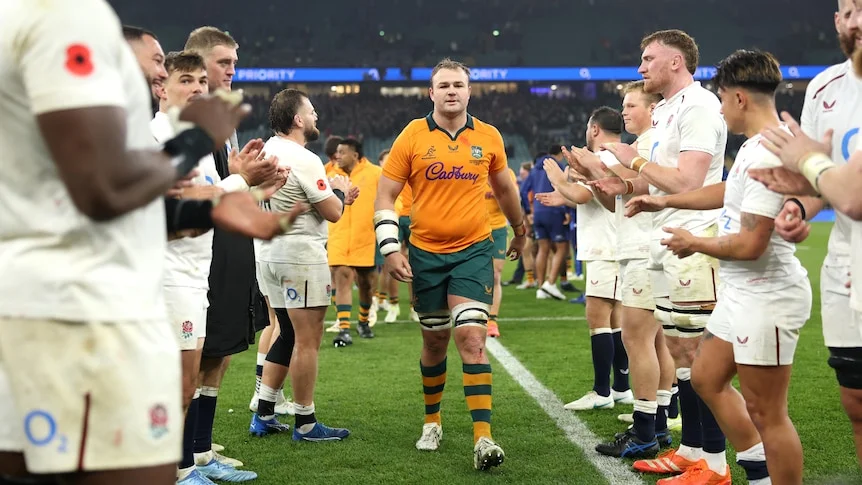
Wallabies’ Brief First-Half Hope Fades in Heavy Defeat to England
Nov 08, 2026
319 views
A flash of the old promise
Max Jorgensen’s try just before half-time gave the Wallabies a brief glimpse of what they’d hoped to find at Twickenham. A sharp counterattack ended in an intercept and a solo finish, cutting England’s lead to nine points. But the scoreline disguised the performance: it was Australia’s only line break in a first half England had largely controlled. Two years earlier, Jorgensen had sprinted down the same touchline in the opposite direction to clinch a last-gasp win. That result suggested the Wallabies were building towards something. The memory made this latest try feel more hopeful than the half itself justified. [Two years earlier, Jorgensen’s late run helped secure a thrilling victory](/news/2024-11-10/live-updates-england-vs-wallabies-international-rugby-union/104580998). [Report: England hammer Wallabies with record-breaking, seven-try spectacular](/news/2026-11-09/live-updates-england-vs-wallabies-nations-championship/107351328)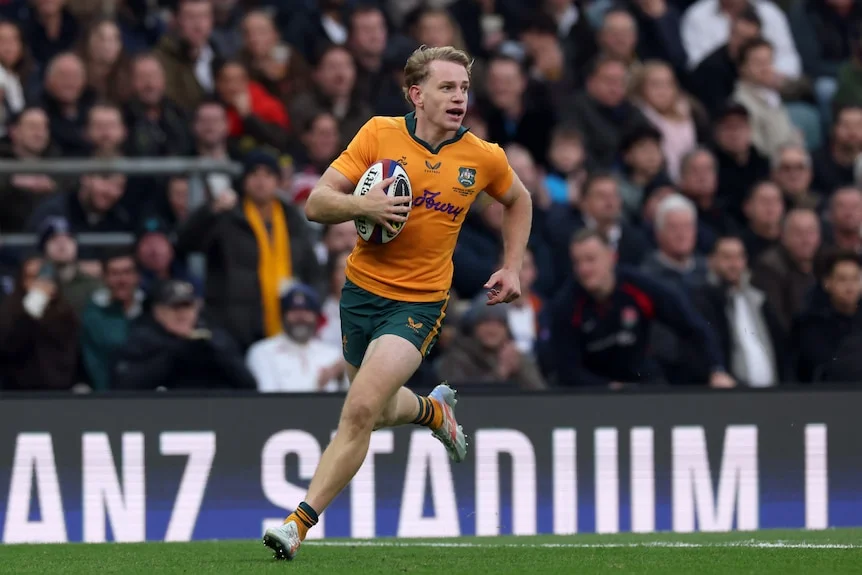
England’s problems didn’t show up on the pitch
The Wallabies arrived hoping to exploit a distracted opponent. England had managed only one win in the Six Nations, finishing fifth, and had won three of eight matches in 2026. A report in The Times suggested tensions were growing between coach Steve Borthwick and his players; senior players angrily rejected those claims before the match. England still had the resources and depth of the richest, best-equipped nation in world rugby. And on the day, they played with the confidence Australia had hoped to find for itself. Their pace at the breakdown pushed the Wallabies backwards, while quick outside backs stretched a defence that looked too narrow to cope. England’s own mistakes were what kept Australia within reach. The Wallabies had wanted to build on their sensational win over South Africa in Perth and show that the heavy defeats to the All Blacks were aberrations, perhaps amplified by Eden Park’s hold over the team. Instead, they left south-west London after a third consecutive heavy defeat, having conceded a record total against England. England have now won 12 of their past 14 matches against Australia.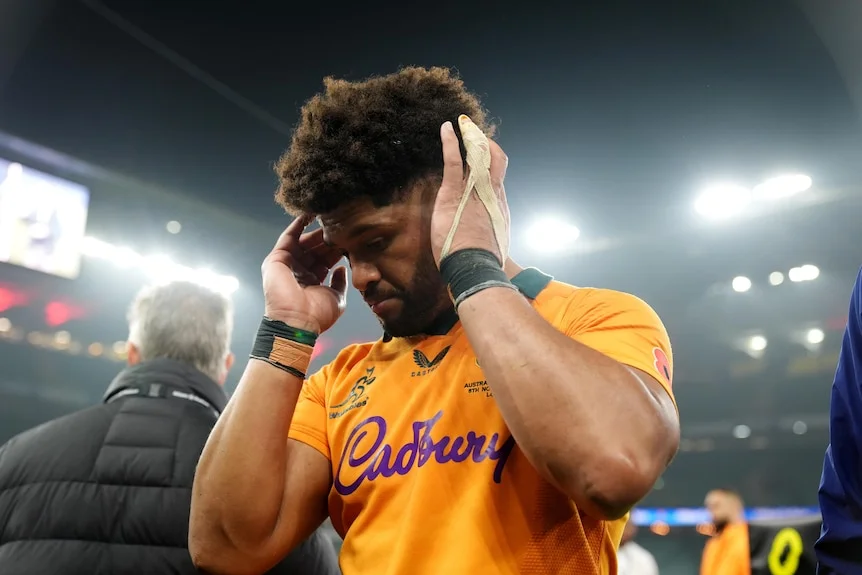
The second half erased the hope
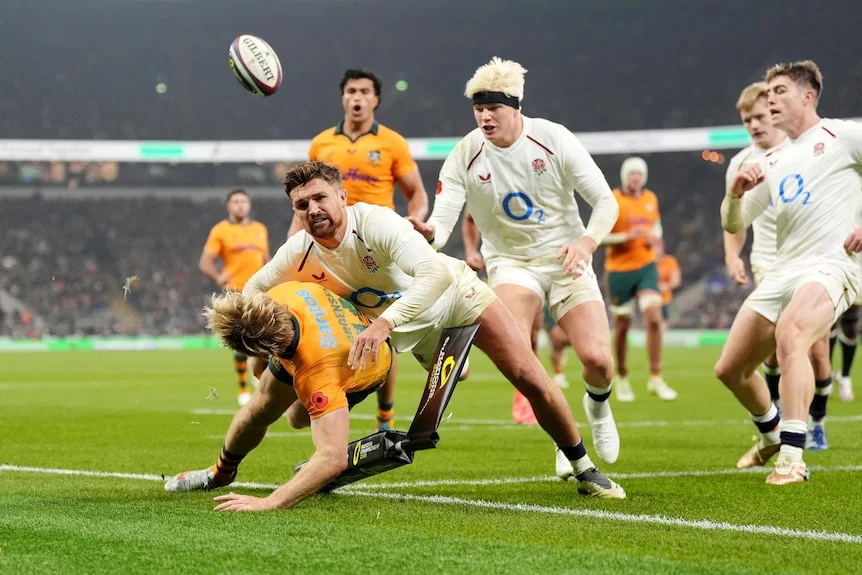
A nine-point deficit at the break might have offered Australia a lift. It didn’t. Within 15 minutes of the restart, England led 38–10 and the contest was effectively over. Almost all of Australia’s tries came from England errors. Les Kiss had looked increasingly agitated from the coaching box. Afterward, he credited England’s discipline and pressure, saying they kept Australia in its own third and were clinical near the tryline. “This wasn't a true reflection of us but that is what happened,” he told the BBC. The few bright spots were slim. Ben Donaldson and Filipo Daugunu combined for four clean breaks in their time together on the field; the rest of the team managed three. Henry Slade also stopped Jorgensen from scoring again in the second half.
Seven days to respond
The more pressing question is how Australia stops the slide. England captain Maro Itoje had called the match significant ahead of a possible World Cup quarter-final against the Wallabies, saying England wanted to win for the immediate result and to show they had “turned a corner”. One match can’t settle the outlook for either side. But England made their point emphatically; Australia now has to answer for its direction.