Could Mine Pollution Have Helped Endangered Frogs Persist at Carwoola?
Nov 17, 2026
357 views
A polluted wetland may have offered an endangered frog a refuge
The surprising possibility in the Carwoola research is that pollution from an abandoned mine may have helped green and golden bell frogs withstand chytrid, a fungus that has affected more than 500 amphibian species worldwide. The disease attacks amphibians’ skin and can interfere with breathing and other vital functions. Green and golden bell frog populations have fallen by about 90 per cent since the 1970s. Researchers at the University of Canberra suspect copper and zinc from the shuttered Lake George Mine at Captains Flat travelled downstream into the Carwoola floodplain. Lab tests suggest very low concentrations of those metals can suppress chytrid while remaining within levels the frogs appear able to tolerate. Postdoctoral researcher Milad Esmaeilbeigi found that one to two micrograms of copper per litre could kill nearly half of the fungus’s zoospores. That’s a striking result, but it doesn’t establish that contamination caused the frogs’ survival. The team is investigating a possible explanation for why this site became an exception: green and golden bell frogs disappeared from elsewhere in the uplands, yet persisted at Carwoola for decades.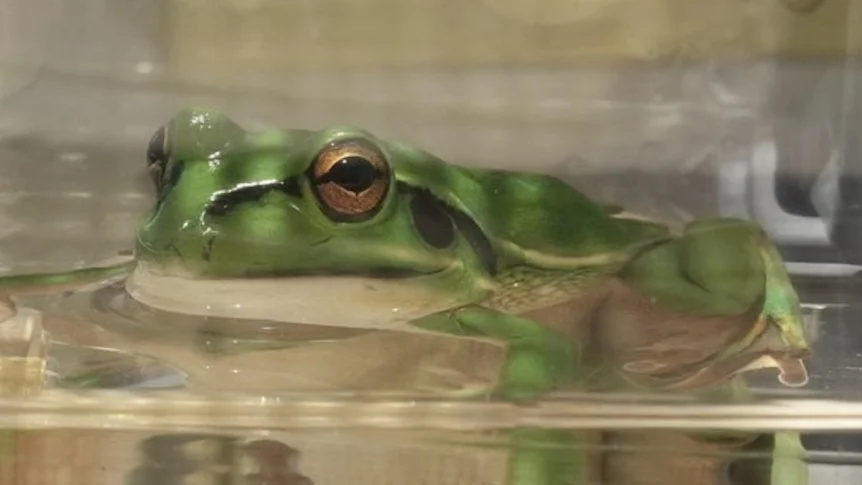 *Researchers suspect contamination from the now-shuttered metal mine at Captain’s Flat helped the species persist. (ABC News: Stuart Carnegie)*
Clues from the last stronghold
Carwoola was the species’ last known stronghold on the NSW Southern Tablelands. A population was rediscovered there in 1999, then declined. The last confirmed sighting was in 2021, and later surveys found no frogs. University of Canberra associate professor Simon Clulow said the species had vanished from the surrounding upland region but persisted at this site for about 50 years longer than elsewhere. “There is something special about this site,” he said.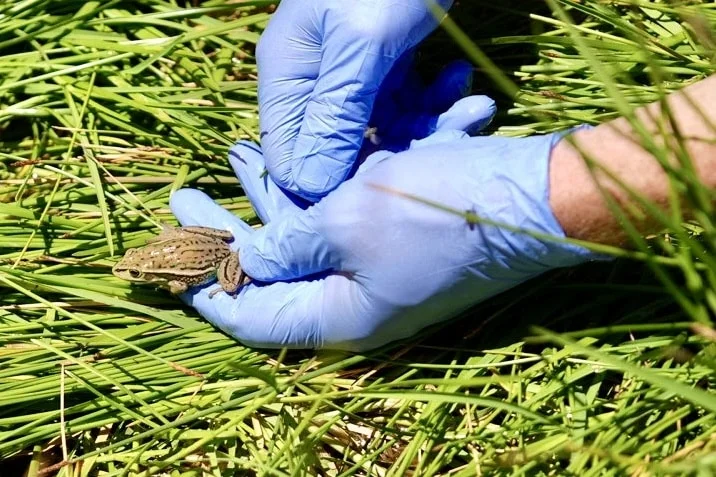 *Researchers found that very low levels of metal pollution could help frogs infected with chytrid. (ABC News: Stuart Carnegie)*
The mine’s legacy may be part of that explanation. Esmaeilbeigi said copper and zinc from the abandoned mine continue to flow through the river system and pollute the Molonglo River. In laboratory tests, both metals inhibited chytrid growth at concentrations the frogs appeared to tolerate. Clulow said the detected levels were well below those known to cause physiological harm.
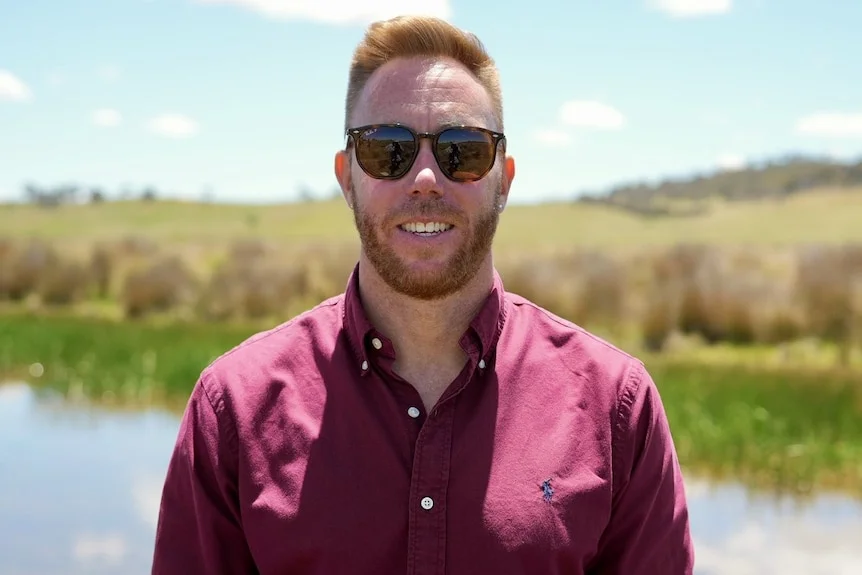 *Simon Clulow says the species disappeared from the upland and inland region, except for this one site. (ABC News: Stuart Carnegie)*
The researchers aren’t arguing for pollution as a conservation tool. They’re asking whether wetlands that are already contaminated might, in some cases, offer threatened species a refuge from disease. Clulow called the possibility a “conservation paradox”: the pollution may have given the frogs an advantage, even though deliberately contaminating habitats would be indefensible. Environmental conditions, he said, can shift the balance between a pathogen and its host.
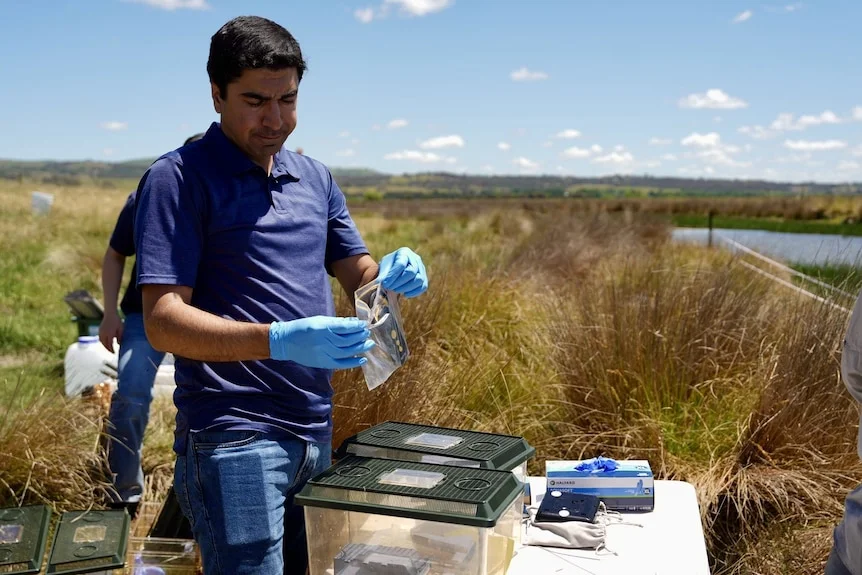 *Postdoctoral researcher Milad Esmaeilbeigi said researchers are investigating how already polluted wetlands might help frogs. (ABC News: Stuart Carnegie)*
Tracking the released frogs
On Tuesday, researchers released 38 frogs into the Carwoola wetlands as part of a conservation program. Each has a microchip, allowing the team to identify individuals with a scanner. Researchers will also take swabs to check whether the frogs contract chytrid and measure the extent of any infection.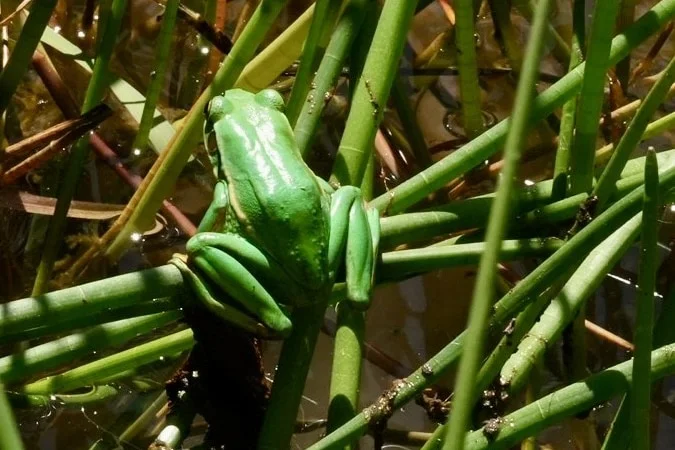 *Researchers plan to use the Carwoola site to try chytrid mitigation strategies. (ABC News: Stuart Carnegie)*
The fungus is already present at the site. “There is chytrid here, it’s everywhere. It’s ubiquitous in the environment,” Clulow said. The team expects the released frogs to encounter it and hopes the suspected metal effect, alongside other measures, will improve their chances.
Those measures include frog “saunas” and salted satellite ponds. Whether they can restore a population that has gone missing from recent surveys remains to be seen.
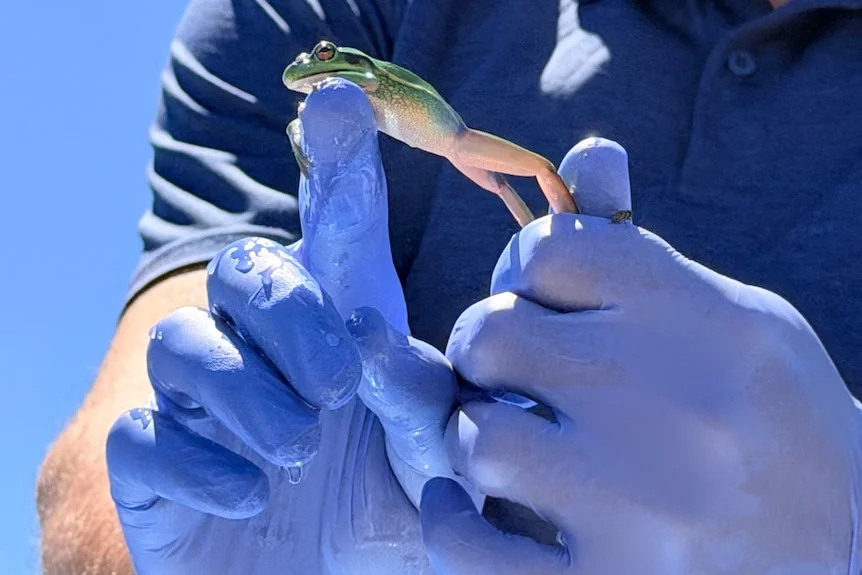 *Chytrid fungus has affected more than 500 amphibian species worldwide. (ABC News: Emmy Groves)*
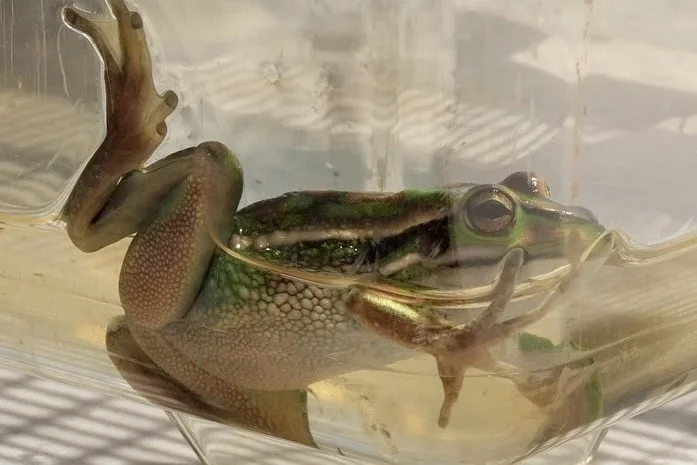 *Thirty-eight frogs were released on Tuesday. (ABC News: Stuart Carnegie)*