Queensland Fire Tests Probe Safety of Mass Timber Buildings
Why mass timber changes the fire safety question
Mass timber’s faster, off-site construction depends on a design question that conventional fire guidance doesn’t fully answer: how does a structure built from combustible materials behave when fire spreads through it? Researchers at the University of Queensland are investigating that question with full-scale ceiling compartment burns at the Queensland Fire Department’s training ground at the Port of Brisbane.
Much fire safety guidance is built around assumptions about materials that don’t burn as part of a building’s structure. Mass timber complicates those assumptions because the structure itself can contribute fuel as a fire develops. That makes the way flames travel through a compartment, and the conditions they create, relevant to both structural design and fire response.
The tests reached temperatures of about 1,000 degrees Celsius. Firefighters supervised the burns while cameras streamed live footage and sensors recorded heat and pressure, giving researchers a detailed view of how fire moved beneath the timber ceilings. That combination matters: footage shows the visible spread, while sensor readings help describe conditions that can’t be judged reliably by sight alone.
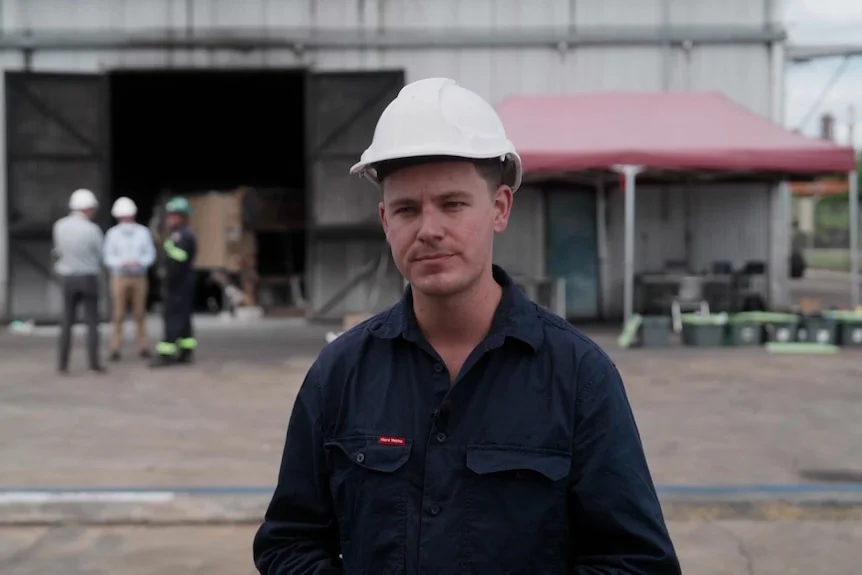
Josh Madden has led research into timber buildings and fire safety. (Supplied: University of Queensland)
Testing fire spread in engineered timber
PhD candidate Josh Madden led the research as part of work by the ARC Research Hub to Advance Timber for Australia’s Future Built Environment. A former fire safety engineer, Madden said existing fire safety guidance generally assumes that structural materials do not burn. Timber changes that premise. The issue is not simply whether a timber building can withstand a fire, but how its materials and design shape the fire’s progress.
Mass timber is made from layers of wood compressed, glued or nailed into uniform panels and slabs. It can be manufactured off-site and assembled quickly. Madden likened the construction process to fitting together Lego bricks, in contrast with concrete, which can require about a month to cure. The appeal is clear: work can shift from a building site to a controlled manufacturing process, with components assembled once they arrive. But faster construction doesn’t answer the separate question of how those components behave under fire exposure.
To study the material’s behaviour, the team built compartments 12 metres long and about 2.5 metres wide. They ignited fires at one end and tracked their spread beneath the ceiling, varying design details such as ventilation and ceiling height between tests. Those variables help show why a single headline temperature can’t tell the whole story. Airflow and room geometry influence how a fire develops, so changing one feature at a time can help researchers understand which conditions affect its movement.
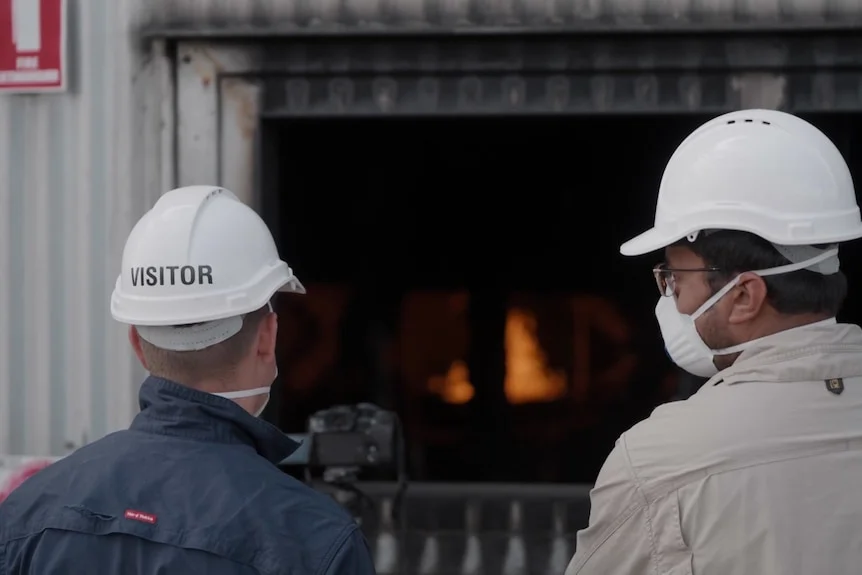
The fire testing was carried out at the Queensland Fire Department's training ground at the Port of Brisbane. (Supplied: University of Queensland)
The temperature readings matter because timber begins to lose strength at about 60 degrees Celsius and loses all its strength at roughly 300 degrees and above. The much higher readings in the experiments provide data on fire conditions as they develop through the compartments. They also underline why the temperature recorded in a test can’t be treated as a direct measure of how much strength a structural element retains: the researchers are examining a changing fire environment, not reporting a simple pass or fail result.
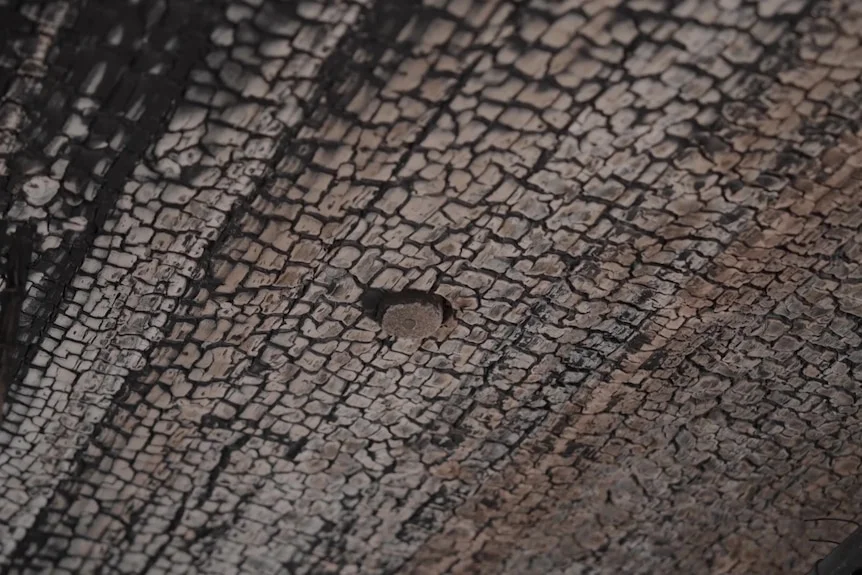
Researchers investigate how the fire spreads through the structures. (Supplied: University of Queensland)
Controlled burns put firefighters in the research loop
The University of Queensland and Queensland Fire Department have shared information on public safety since 2014. QFD fire engineer Mick Conway said controlled burns let firefighters learn about unfamiliar materials under experimental conditions, before encountering them in a live incident. That exchange gives the work a practical dimension: researchers can study fire behaviour while firefighters gain experience with a construction method they may be asked to respond to.
Experimental conditions also make comparison possible. In a live incident, crews have to make decisions amid uncertainty; a controlled test lets a team observe a fire’s development while recording the factors that may help explain it. That doesn’t make a test a substitute for operational experience, but it can give responders and designers a shared basis for discussing how a timber compartment behaves.
What the findings could mean for timber design
The researchers are analysing the results for Madden’s PhD thesis. His aim is to develop a design framework that gives fire safety engineers the evidence to assess timber buildings with greater confidence. If you’re working in this space, the value of that framework will depend on whether the tests can help engineers connect details such as ventilation and ceiling height to fire behaviour in a way that informs actual design decisions.
This is more significant than it looks. A building method can be quick to assemble and still demand careful, material-specific fire analysis; speed on the construction site doesn’t settle the safety question. And this is the part most people overlook: evidence from a full-scale burn is useful only when engineers can translate it into guidance that applies beyond the test compartment. The study is still being analysed, so its practical reach isn’t established yet.
That said, the research addresses a real gap between the promise of mass timber and the evidence needed to assess it. The practical test will be whether the resulting framework helps fire safety engineers evaluate timber buildings with greater confidence as construction becomes more common. The work is still in progress.