LifeFlight South West Faces Funding Deadline as Queensland Contract Nears End
LifeFlight South West’s funding agreement runs only through April next year, leaving a vast stretch of south-west Queensland without long-term certainty about helicopter retrievals. The service covers an area larger than Victoria, where distance can turn a medical emergency into a transport problem as much as a clinical one. Its future now depends on whether government support can complement industry contributions, a change that would shift the service’s funding model as its original industrial role evolves.
For Olivia Martin’s family, the helicopter’s role was immediate and life-changing. When her toddler Jack fell into a fire pit at Carnarvon Gorge, the nearest hospital was a three-hour drive away and there was no nearby airstrip for the Royal Flying Doctor Service to use. The family faced a gap between needing urgent specialist care and having a practical way to reach it. In remote areas, that gap can shape the options available to patients before treatment even begins.
Martin and her family called Triple Zero and cooled Jack’s severely burned hands in bottles of water while waiting for help. Beneath what looked like cold white ash, she said, hot coals remained. The burns extended from his elbows to his fingertips. The family was managing an emergency at home while waiting for transport, with the distance to hospital setting the terms of the response.
LifeFlight took Jack to the Queensland Children’s Hospital in Brisbane. He underwent surgery every three days for six weeks. Now six, he needs an operation each year so scarred skin on his arms can stretch as he grows. Martin said the procedures bring back the trauma of the accident, a reminder that the consequences of a remote emergency can continue long after the initial retrieval.
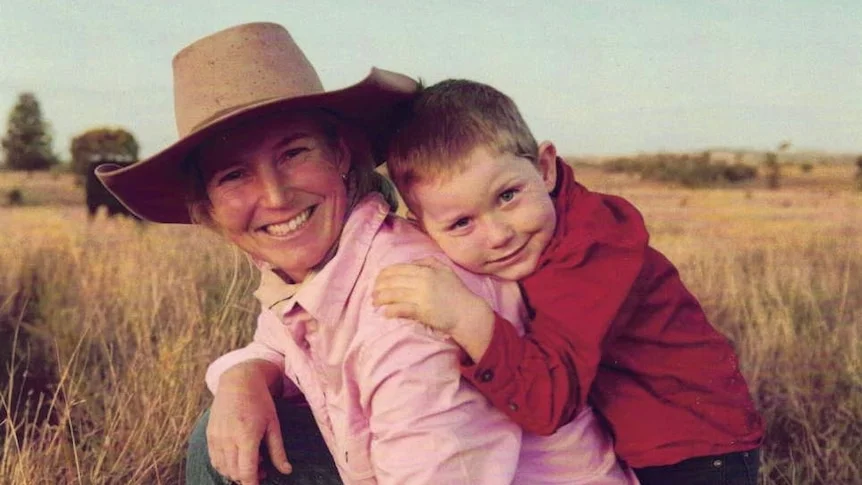
Olivia Martin and her son Jack live on a property between Roma and Taroom. (Supplied: Olivia Martin)
“He was burnt to the bone,” Martin said. “There was no airstrip nearby, so the Royal Flying Doctor couldn’t come and get us. We needed a helicopter.”
That gap in access is central to the funding debate. The Roma-based branch reaches communities from Charleville and Augathella in the west to Carnarvon Gorge in the north, extending south across the New South Wales border to Moree. Its chair, Kate Scott, said the service is the only LifeFlight base in Queensland without state government support. The size of the coverage area makes the question more than a matter of keeping one aircraft available: it concerns whether a regional network can provide a consistent option across communities separated by long distances.
“I cannot imagine that amount of area and all those people and all those communities being left high and dry when you ring Triple Zero,” Scott said. Paramedics and the Royal Flying Doctor Service provide essential care, she said, but some incidents are difficult to reach without a helicopter. Different services have different capabilities, and the availability of one doesn’t automatically solve the access problems addressed by another. If you’re working in this space, the practical issue is how those services fit together when roads, distance or the lack of an airstrip narrow the choices.
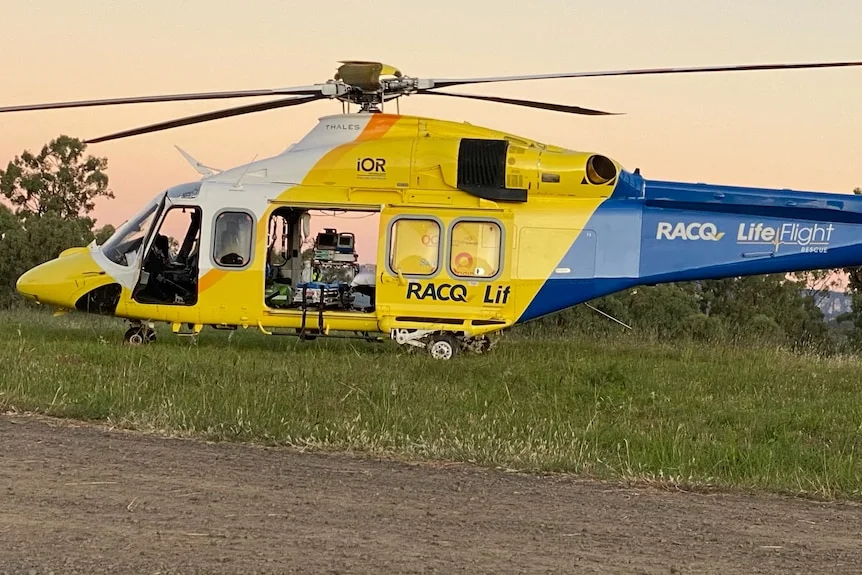
LifeFlight South West covers an area larger than the state of Victoria. (Supplied: Olivia Martin)
A funding model in transition
Oil and gas companies established the service 15 years ago to reach workers in remote areas. They still fund its operations collectively, but the agreement ends in April next year, and the companies are asking the government to contribute. The arrangement reflects a service built around industry’s needs that now also serves nearby communities. That shift puts pressure on the funding model: the companies remain involved, but they’re asking the state to share responsibility as the service’s public role grows.
Jo Sheppard, chief executive of Toowoomba and Surat Basin Enterprise, said industry’s reliance on the service is falling while demand from local communities is rising. Several companies may continue contributing at a lower level if government funding is secured. That leaves a practical question about how much each source will provide, and whether the combined support can sustain the service after the current agreement expires. The companies’ willingness to contribute is conditional; it doesn’t amount to a settled replacement for the existing deal.
Sheppard argued that if Queensland supports the rest of the LifeFlight network, the south-west branch should also receive state backing. Without it, she warned, pressure could shift to the Toowoomba LifeFlight base and road ambulance services, leaving communities more exposed. That possibility connects the Roma decision to the wider emergency response system: a funding gap at one base could affect how other services are called on, though the scale of any such effect isn’t established in the statements provided. This is more significant than it looks. The question is not only whether one base continues, but how its absence would change the workload carried elsewhere.
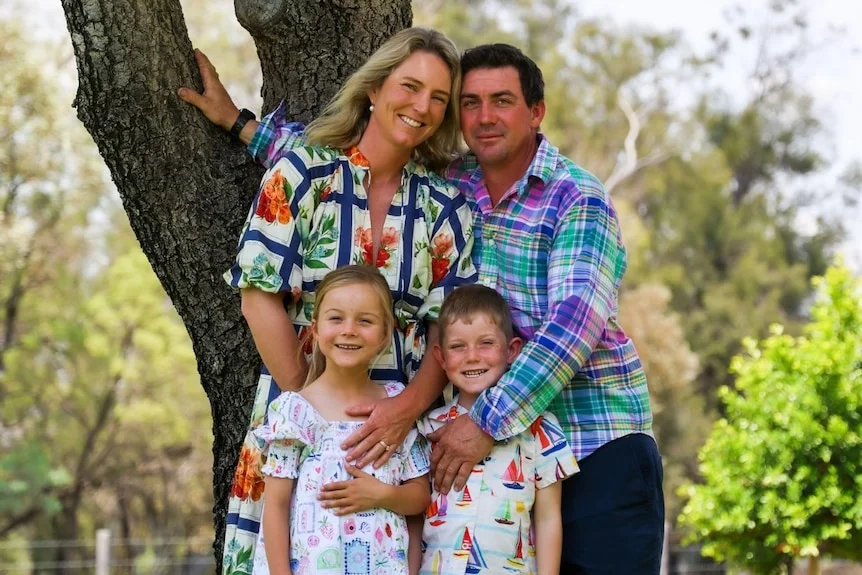
Olivia and Tom Martin live on a property between Roma and Taroom, with their two children Katie and Jack. (Supplied: Olivia Martin)
The Queensland Health Minister’s office said the Queensland Ambulance Service maintains response capacity in the region, including round-the-clock fixed-wing retrievals and road ambulance operations. The government is considering future funding arrangements for the Roma base, the spokesperson said, while stressing that industry funding must remain part of the solution. That response points to a shared model, but it doesn’t yet specify what the government’s contribution would be or how the companies’ continuing support would work.
What the decision will mean for the region
For families living far from hospitals, the service’s value rests on what can happen before a patient reaches one. A fixed-wing retrieval, a road ambulance and a helicopter each form part of the region’s response, but geography can limit which option is workable in a particular incident. Martin’s account shows how that distinction can matter in practice. The helicopter provided a route to hospital where, she said, there was no nearby airstrip for the Royal Flying Doctor Service.
Here’s the thing: the end of the agreement sets a deadline, but the available statements don’t yet describe a completed funding plan. If government support is secured, several companies may still contribute, though at a lower level. If it isn’t, the concerns raised by Scott and Sheppard point to unanswered questions about the service’s future and the pressure other providers may face. And yet the government says it is considering arrangements, so the outcome remains open.
With the current agreement nearing its end, the next funding arrangement will determine whether that helicopter capacity remains available across the region. The immediate test is whether government and industry can agree on a model that reflects both the service’s origins and the communities now relying on it. For people who live hours from hospital, certainty about who pays can become certainty about what help is available when a call comes in. A decision with consequences far beyond the funding table.