Australia’s Economic Freedom Ranking Challenges the Case for Smaller Government
Australia already ranks fourth globally for economic freedom. That makes Shane Oliver’s case for cutting taxes, public spending and regulation more complicated than it first appears: the country scores highly by a measure that also puts Singapore, with its extensive state role in housing, at the top.
Oliver, AMP’s chief economist, set out his argument in a note published this week. He says government intervention has grown too far over the past three decades, and that free markets produce greater material prosperity than government direction.
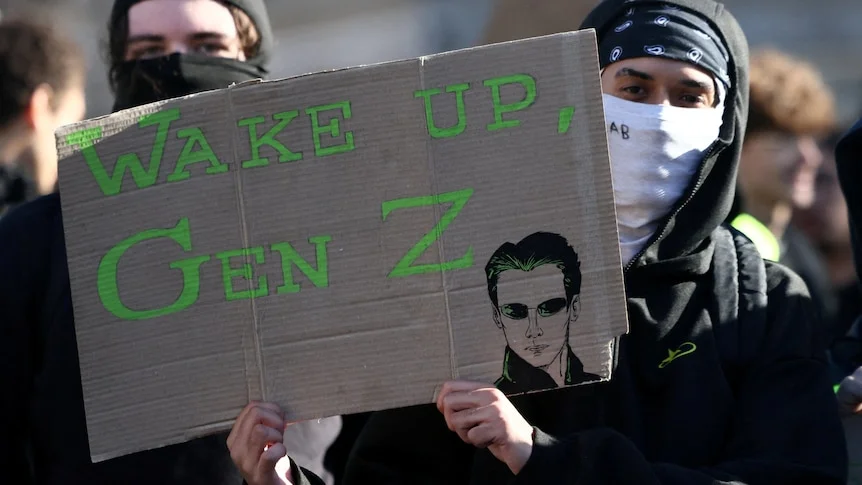
He also sees growing scepticism about capitalism, including what he calls “gen-Z socialism”. Oliver describes the movement as distant from Marxist theory and, citing one commentator, partly a demand for “free stuff”. Its central ideas, in his account, include distrust of trickle-down economics, support for redistribution from the richest, and suspicion of private business. He worries that debate over dividing up wealth has obscured the benefits of markets and economic freedom, and that fewer politicians now insist there’s “no free lunch”.
There’s a real argument here about living standards and the role of government. But the language used to frame it deserves closer scrutiny.
“Free markets” carries a political history
Oliver calls his note a defence of free markets, but doesn’t define what he means by the term. That matters. “Free markets” sounds like a neutral description; in political debate, it often carries a particular set of assumptions about the proper limits of government.
Milton Friedman helped popularise the phrase in the 1970s and 1980s. He used it to challenge governments, regulations, unions and other constraints on markets. Friedman became a major figure in the Reagan Revolution, and famously argued that a company’s sole social responsibility was to increase its profits and maximise shareholder returns—an idea critics have linked to damaging consequences.
The phrase has rhetorical force: if your preferred policies are labelled “free markets”, opponents can be cast as opponents of freedom itself. A reader unfamiliar with that history may take the label at face value, even though it doesn’t settle which rules are useful, or who benefits from removing them.
What does the freedom index measure?
Oliver backs his argument with a chart showing a positive relationship between economic freedom and GDP per person across countries. The chart draws on data from the World Population Review, International Monetary Fund, Heritage Foundation and AMP.
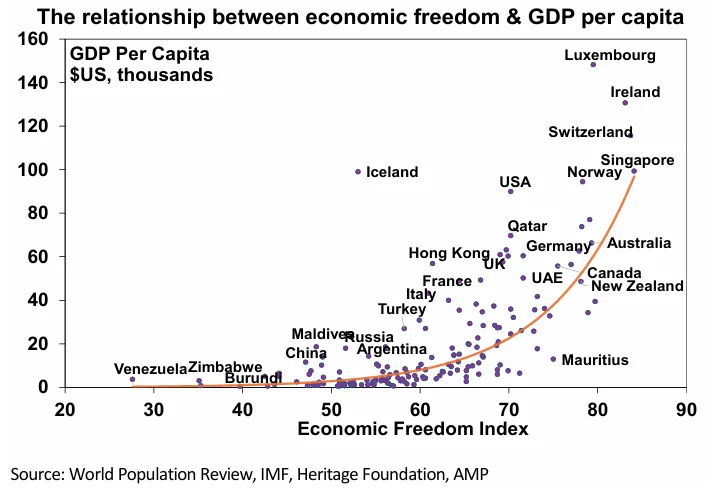
That relationship is worth examining, but the meaning of “economic freedom” depends on how it’s defined. Oliver’s chart refers to the Heritage Foundation’s Index of Economic Freedom, a measure created by a US think tank with a long record of advocating free-market policies.
The Heritage Foundation published Project 2025, the policy blueprint associated with Donald Trump’s proposed overhaul of the US government. It also produced Ronald Reagan’s 1981 Mandate for Leadership, which helped set the direction of the Reagan era.
The index grew out of debates in the Mont Pelerin Society during the 1980s, including Friedman’s effort to define and compare economic freedom across countries. The Heritage Foundation launched its measure in the mid-1990s. It scores 12 measures across four broad categories in 184 countries, grading each from zero to 100 and giving all 12 equal weight in the overall score.
In the 2026 edition, Singapore ranks first, followed by Switzerland, Ireland, Australia and Taiwan. The ranking is clear. What it means by “freedom” is less straightforward.
Singapore complicates the simple story
The index tends to reward policies such as lower taxes, fewer tariffs and less public spending. Yet Singapore, its top-ranked country, also has a home-ownership rate above 90 per cent. The state has built and financed housing at scale, acquired land, planned land use and used anti-speculation policies to keep homes affordable for most residents. The same political party has governed the country since 1959.
When Singaporean economist Sock-Yong Phang visited Australia in 2024, she said Singapore may rank as the world’s “freest” economy because it has no trade tariffs and keeps its capital markets open. But, she added, “this description doesn’t quite capture the reality of its land and housing sectors where there is extensive government intervention and regulation.”
Here’s the tension: a country can score highly on this index while relying on forceful government action in a major part of its economy. That doesn’t make the index useless. It does mean that a headline score can hide important choices about which markets are open, which are regulated and how the measure weighs each one.
The case for intervention—and the case against it
Oliver acknowledges that markets can fail. His list includes externalities such as pollution, the under-provision of public goods, monopolies, financial instability and inequality.
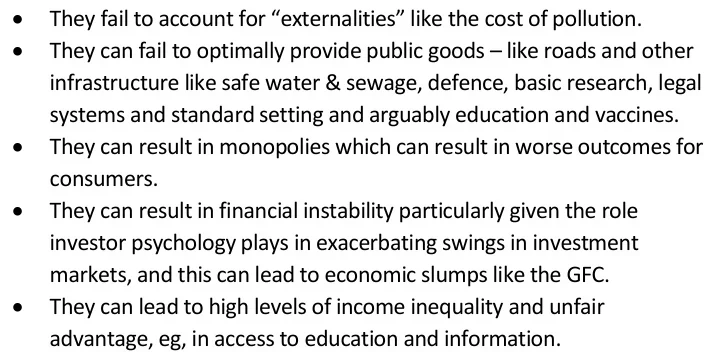
Those failures justify a substantial public role, Oliver argues. Governments should protect the environment, uphold property rights through the legal system, build infrastructure and provide public goods such as clean water, roads and universal education. They should also regulate monopolies, maintain fair competition and provide a safety net against extreme poverty and inequality.
His stated aim is to find the right balance between markets and government planning. But Oliver believes Australia has tilted too far toward government involvement over the past 20 years. To restore productivity and living standards, he proposes easing rules in labour and product markets, lowering taxes and reducing public spending.
That diagnosis raises a practical question. If Australia already ranks fourth on the Heritage Foundation’s measure, what would it take to reach the top? Singapore’s example suggests one possible answer: strong government involvement in housing, including anti-speculation policies, to expand access to affordable homes.
For younger Australians who support greater economic equality, affordable housing would be more than a policy win. It would mean access to a kind of freedom many have never had.