CAS Restores Senegal’s Africa Cup of Nations Title After Morocco Appeal
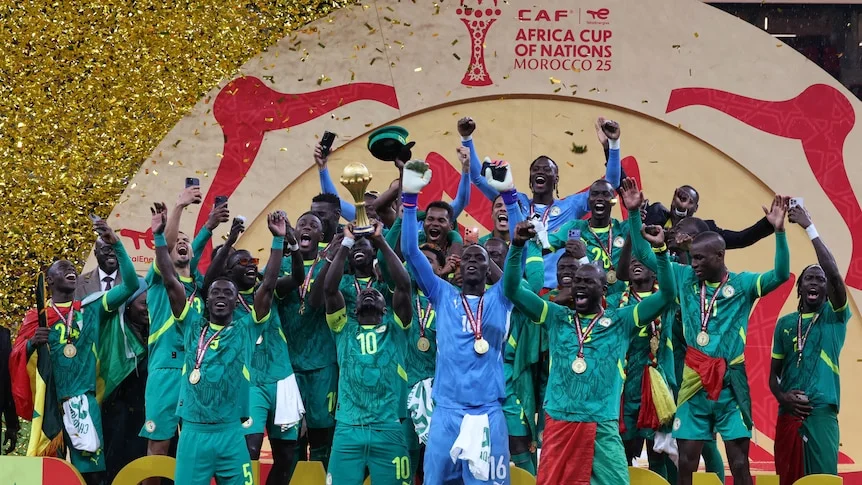
Senegal’s Africa Cup of Nations title has been restored after the Court of Arbitration for Sport ruled that the match referee had authority to restart January’s disputed final. The decision overturns a 3-0 default victory previously awarded to Morocco and returns the championship to Senegal, which won 1-0 after extra time. The ruling settles the sporting result, though Morocco’s stated plan to challenge it means the dispute may continue in a different forum.
The case turned on what happened after Senegal’s players left the field to protest a late penalty awarded to Morocco. Referee Jean-Jacques Ndala allowed play to resume after a 15-minute delay. Morocco’s Brahim Diaz tried a Panenka penalty, but Senegal goalkeeper Edouard Mendy saved it; Senegal then scored in extra time. That sequence matters because CAS was asked to assess whether the match had been abandoned under the competition rules, not to replay the sporting judgment around the penalty itself.
Why CAS reversed the result
A Confederation of African Football appeals panel had ruled in March that Senegal’s walk-off meant the team forfeited, awarding Morocco a 3-0 win. CAS took a narrower view of the tournament rules, which said a team that refused to play should lose the match. It said that provision applied when a team’s conduct led the referee to abandon the game permanently. The distinction is procedural, but it decides the case: leaving the pitch during a protest did not itself settle whether the match was over.
That didn’t happen here. CAS said Ndala had “sole authority” to decide whether the match could continue, and found that he “did not err in law” by restarting it. The three-member panel was unanimous. In practical terms, the panel treated the referee’s decision to resume as the point that separated a temporary stoppage from a completed abandonment.
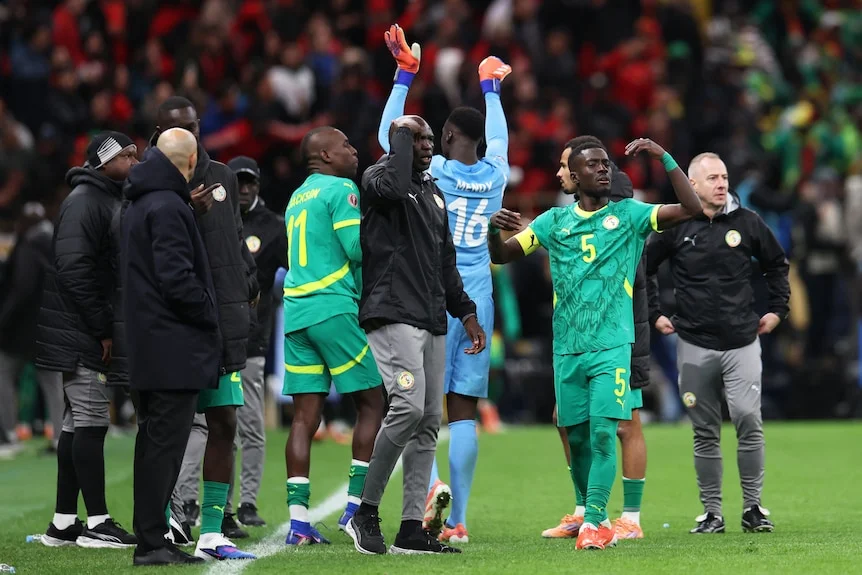
The ruling also relied on soccer’s field-of-play principle: referees’ decisions during a match generally aren’t for sports tribunals to reverse. CAS said Ndala’s whistle to restart play showed he considered the conditions met, with both teams back on the pitch and willing to continue. That approach leaves room for a tribunal to examine whether a rule was applied correctly while limiting its role in second-guessing decisions made in the heat of a match.
The panel acknowledged the decision came amid “extreme tension,” but said that didn’t make it arbitrary. It found no sign that outside factors had influenced Ndala’s judgment. Senegalese federation president Abdoulaye Fall welcomed the outcome, saying CAS had “delivered justice to sport.” This is more significant than it looks: the ruling gives the referee’s authority to manage a disrupted match a central role in deciding whether the final result stands.
Morocco signals another challenge
Morocco’s federation says it intends to challenge the ruling at Switzerland’s supreme court in Lausanne, focusing on the integrity of one of the CAS judges. It alleged “confirmed communication” between German arbitrator Ulrich Haas and Fall 48 hours before the decision. CAS rulings can be challenged there on limited procedural grounds, including concerns about a judge’s integrity. The allegation is therefore distinct from Morocco’s original argument about the walk-off rule; it concerns the process behind the ruling.
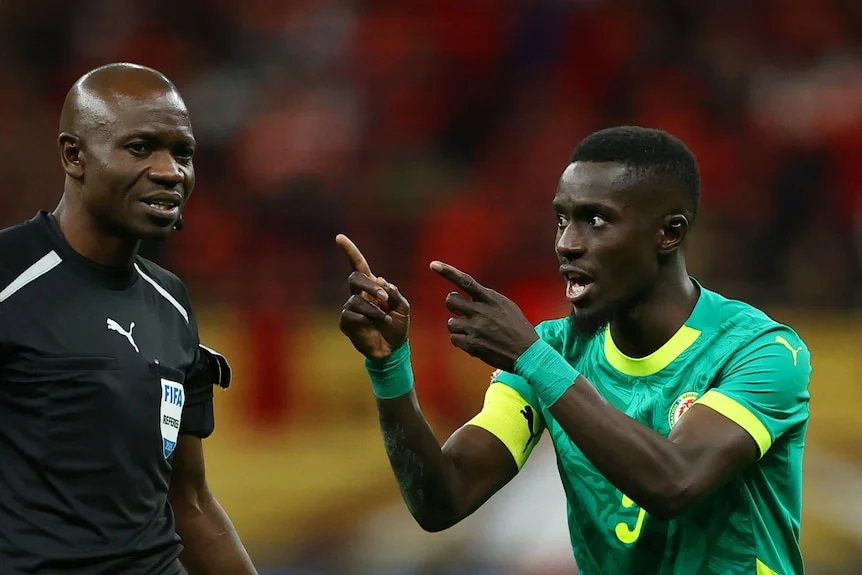
The final’s aftermath was turbulent on and off the pitch, with clashes involving players, fans and security. Senegal’s victory came after a match that had already become a source of competing claims: Senegal relied on the referee’s decision to continue, while Morocco’s case rested on the tournament’s walk-off rule. Those claims reflect two different ways of reading the same episode, one centered on what happened after the stoppage and the other on the players’ departure from the field.
The dispute followed both teams to the World Cup, where each regarded itself as Africa’s champion. Senegal even paraded the trophy before a March match against Peru, while Morocco held the title under CAF’s ruling. CAS has now reinstated the result achieved on the field, though Morocco’s proposed challenge could keep the dispute alive. For supporters and organizers, the reversal clarifies which team holds the championship under the CAS decision, while leaving a procedural question pending.
What the ruling means for the next AFCON
The next men’s AFCON begins in June, co-hosted by Kenya, Uganda and Tanzania. Morocco will enter seeking its first title in 50 years; Senegal will do so as the champion restored by CAS. The timing gives the ruling an immediate sporting consequence: the teams approach the tournament with their status now defined by the tribunal’s decision, even as Morocco signals it will contest the process.
If you’re working in this space, the central lesson is how much turns on the referee’s authority to restart play and on the precise wording of competition rules. Similar disputes often hinge on whether a stoppage is temporary or final, and on which official has authority to make that call. Here’s the thing: a result on the pitch can remain unsettled long after the final whistle when disciplinary bodies and sports tribunals interpret the same events differently. And yet, the match itself produced a winner. Still unresolved.