NT Government Demolishes Eight Defective Bellamack Homes Ahead of Land Auction
The Northern Territory government has acquired and demolished the last eight homes standing from a Bellamack affordable housing development, ending years of uncertainty for their owners. The cleared land is scheduled for auction on December 8, with four packages of two freehold unit-titled lots each. The sale gives the sites a possible route back into development, but it doesn’t settle the broader dispute over who should bear the cost of homes that owners were told, in effect, they could rely on.
That distinction matters. Demolition removes the immediate problem of unsafe buildings; it doesn’t erase the financial and personal consequences of living with serious defects, or answer the outstanding question of compensation. The government has reached agreements with the owners to acquire the properties, but hasn’t disclosed the amounts paid. For the affected households, the acquisition is a concrete end to ownership of the homes. The auction is a next step for the land, not a final accounting of the damage.
Defects left owners facing years of uncertainty
The homes were among 18 built in Palmerston’s Bellamack suburb between 2012 and 2013 under an NT government-backed affordable housing scheme. The reported faults were structural and varied: leaks, corrosion in cladding and steel frames, shifting floors, and tiles that lifted or cracked. Engineering problems also left the houses unsafe in severe storms or cyclones, a serious concern in a region where buildings must contend with extreme weather.
These weren’t cosmetic complaints that could be put aside until a convenient renovation. Problems affecting frames, floors and weather protection can call into question whether a house is safe to occupy and how much repair would be needed to make it sound. The supplied details don’t establish the full technical cause of each defect, but the combination of faults helps explain why demolition became the government’s chosen course for the remaining homes.
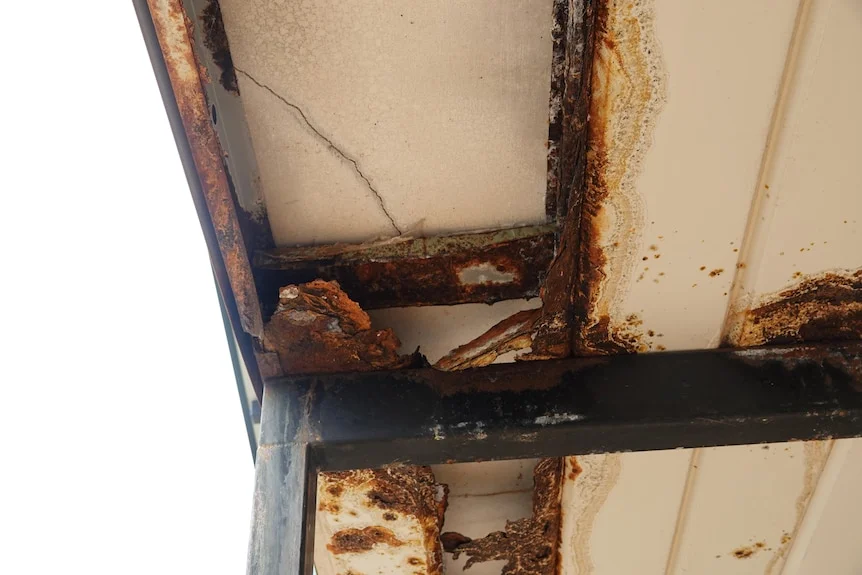
Leaks and corrosion were among the serious faults impacting the buildings. (ABC News: Ian Redfearn)
The NT government says it reached agreements with the owners to acquire the properties. It hasn’t disclosed the compensation amounts, leaving the financial terms of those agreements unclear to the public. Lands, Planning and Environment Minister Joshua Burgoyne said owners had bought homes they believed were safe, only to discover severe defects. He said the homes failed to meet the building code in force at the time and that demolition was the responsible course.
The dispute stretched across more than a decade. A change to NT building rules during construction left owners technically ineligible for government compensation, according to the account of the case, pushing them to pursue builder George Milatos through the courts. That sequence points to a difficult gap between the expectations created by a government-backed scheme and the remedies available when a project goes wrong. A homebuyer can face years of uncertainty even after defects are established, particularly when the route to compensation depends on legal action against a builder.
Milatos owes more than $2.5 million in compensation and has previously said he has no money. That debt remains a stark measure of the distance between a legal outcome and money owners can actually recover. A compensation award can recognize what people are owed, but it doesn’t by itself guarantee payment. The government says it’ll continue pursuing claims against him.
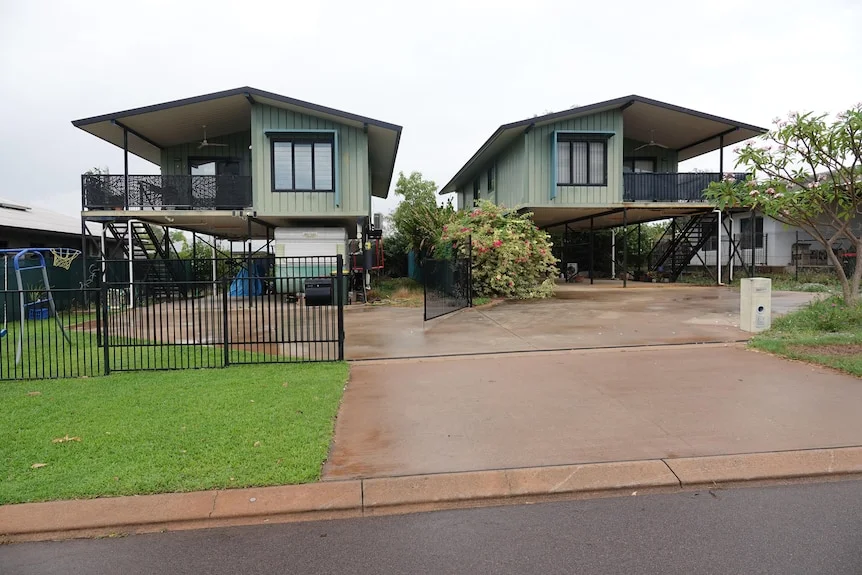
The affordable housing scheme included 18 homes in Bellamack. (ABC News: Ian Redfearn)
Cleared sites set for December sale
Local MLA Matthew Kerle welcomed the acquisition as “long overdue closure” for residents. He said some owners had come to his office in tears because they felt trapped by the defective homes, and that the resolution would let them move on with their lives and families. His description underscores the strain that can persist when a home, usually a household’s largest purchase, becomes a source of safety concerns and unresolved costs.
This is more significant than it looks: the government’s agreement has changed the immediate position for the remaining owners, who no longer face the prospect of being tied to the last eight properties. But closure can mean different things here. The homes are gone, and the owners have reached agreements with the government; compensation claims against Milatos remain unresolved. Those are separate outcomes, and treating the demolition as the end of the dispute would blur the difference.
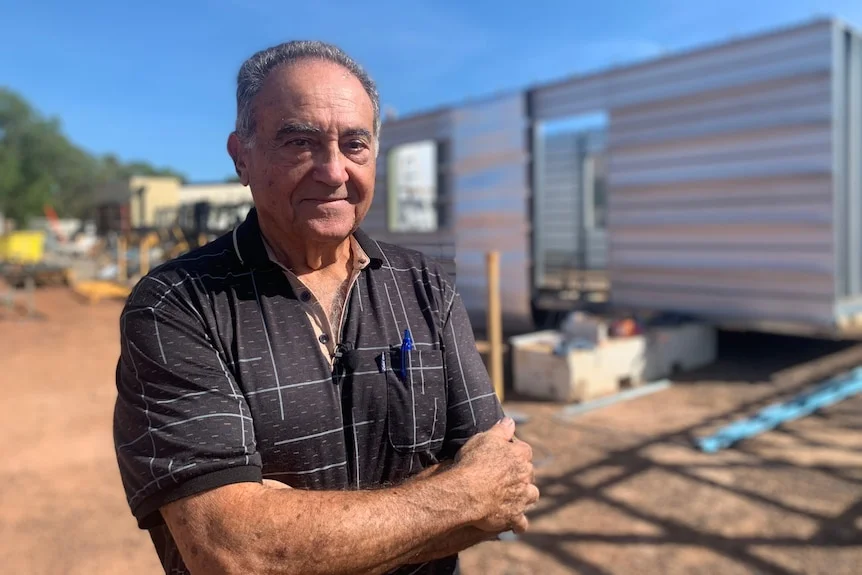
George Milatos owes more than $2.5 million in compensation. (ABC News: Jane Bardon)
What the auction can resolve
The December 8 auction, set for 11am, will offer the remediated Bellamack sites in four packages of two freehold unit-titled lots each. Dividing the land into packages gives prospective buyers a defined set of lots to bid on, and the auction could return cleared sites to the development process. Yet a sale price, buyer or construction plan hasn’t been provided in the source, so the auction’s eventual outcome remains open.
For housing policy, the case offers a blunt reminder that affordability schemes depend on more than the initial price or stated purpose of a home. Buyers also rely on construction that meets applicable standards and on a clear path to remedy if serious defects emerge. If you’re working in this space, the Bellamack story is a case study in how a technical rules change can shape the practical options available to homeowners long after a build is complete.
And yet. The auction is a forward-looking step for the land, while the compensation dispute looks backward at responsibility and loss. The Country Liberal Party government says it’ll continue pursuing claims against Milatos, but the source gives no indication of when those claims might be resolved or what recovery could be possible. The lots may soon change hands. For the people affected, the lasting measure of closure will depend on what happens to the claims still outstanding.