The permit system outage has turned a policy dispute into an immediate problem on Bribie Island. After the National Parks booking system was hacked earlier this month, people could no longer buy camping or vehicle access permits in Queensland, Victoria and South Australia. The system was still offline on Tuesday afternoon, although visitors could continue camping and driving at K’gari, Cooloola and Bribie Island recreation areas without paying.
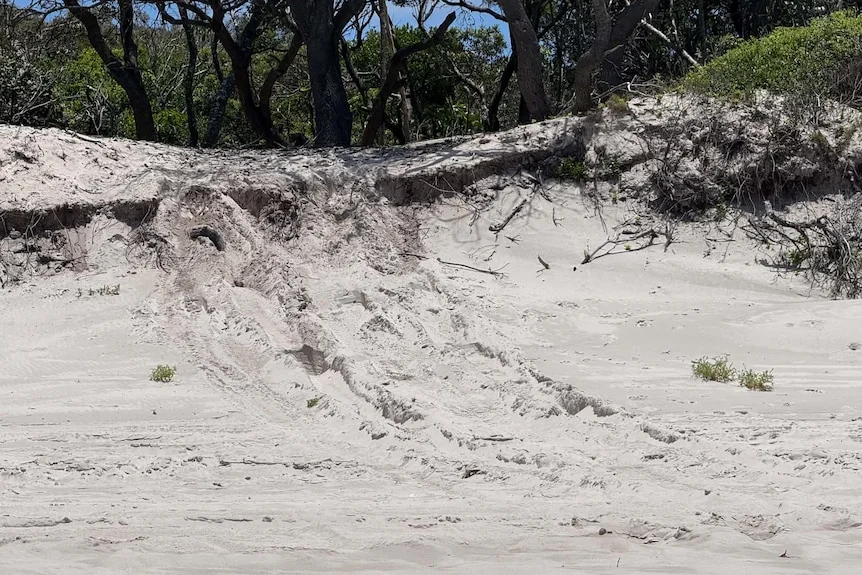
Darren Jew, of the Moreton Bay Foundation, described the weekend on Bribie as a “free-for-all.” He said drivers had gone over dunes where turtles nest, calling some of the behaviour “disgraceful.” Fresh tyre tracks were also spotted on the island’s dunes.
Fresh tyre tracks over sand dunes in Bribie Island National Park were spotted over the weekend.
The Queensland environment department said it was working to “securely reactivate bookings as soon as possible” and urged visitors to check its website for updates. But the outage has sharpened a longer-running question: why are seasonal driving limits still missing when the state’s own Coastal Management Plan 2026, released in April, proposed measures such as closing turtle nesting beaches at certain times?
A 2025 study warned that Australia’s most beautiful beaches were being “pummelled to death” by four-wheel drives. On Bribie, Jew says practical steps could include closing the beach at night. Alternative access would still let people reach camping grounds, he said.
“There's alternative access … so people can still get to camping grounds,” Jew said. He called the delay frustrating and added: “It just seems to be potentially some problems with the will to do it.”
Every nesting season counts
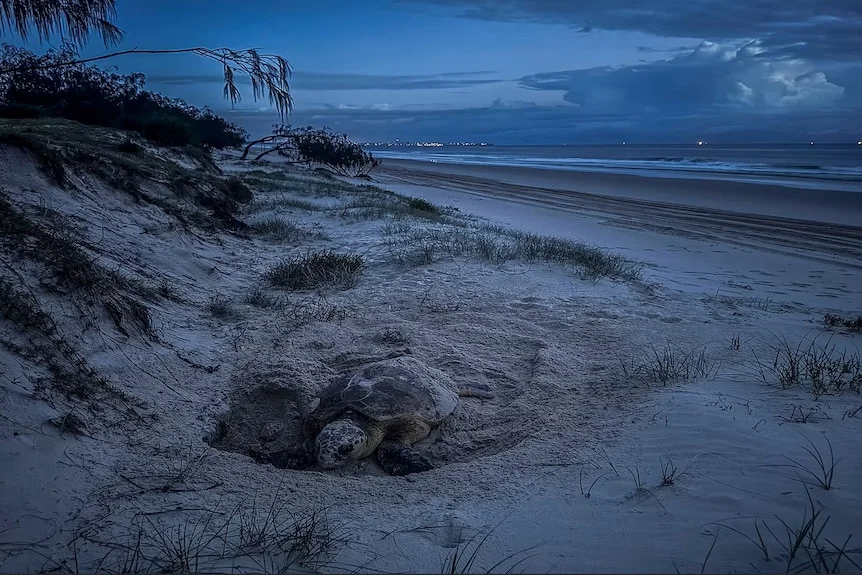
Endangered loggerhead turtles nest on Bribie between November and May. The island averages about 50 nests each season; in 2024–25, the count reached 100.
A turtle preparing to lay eggs on Bribie Island during a previous nesting season. Supplied: Darren Jew
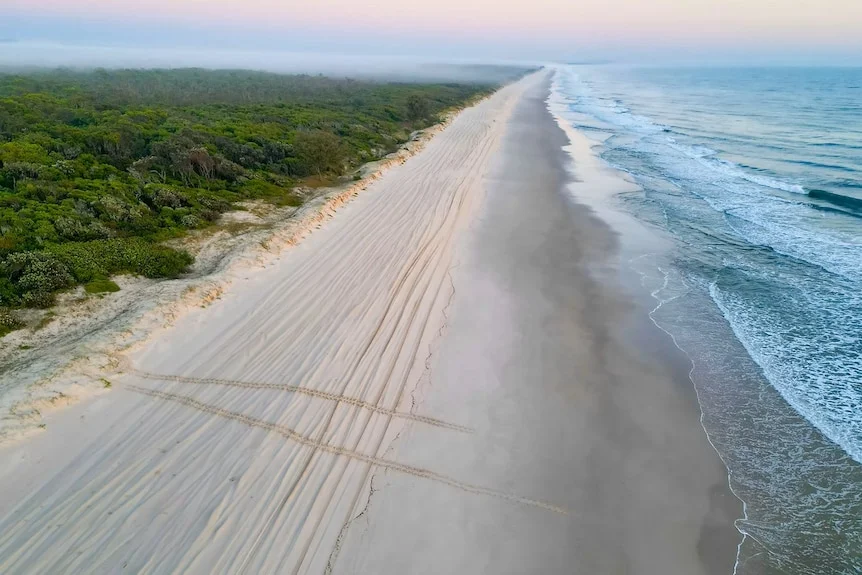
Jew says vehicles have destroyed nests over the years, while hatchlings have become trapped in deep tyre ruts and died from dehydration. “It would be nice to get as many hatchlings off the beach as possible and them not having a tough time getting from the dunes to the ocean across mountain ranges,” he said.
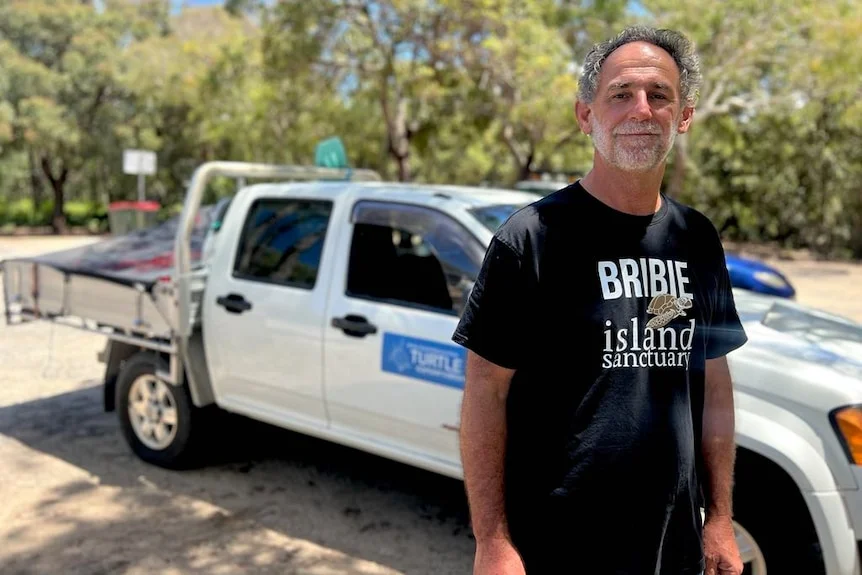
Darren Jew has campaigned for better four-wheel-drive management on Bribie Island. ABC Sunshine Coast: Jessica Ross
“If we can see some action, the sooner the better — every season matters for a critically endangered species.”
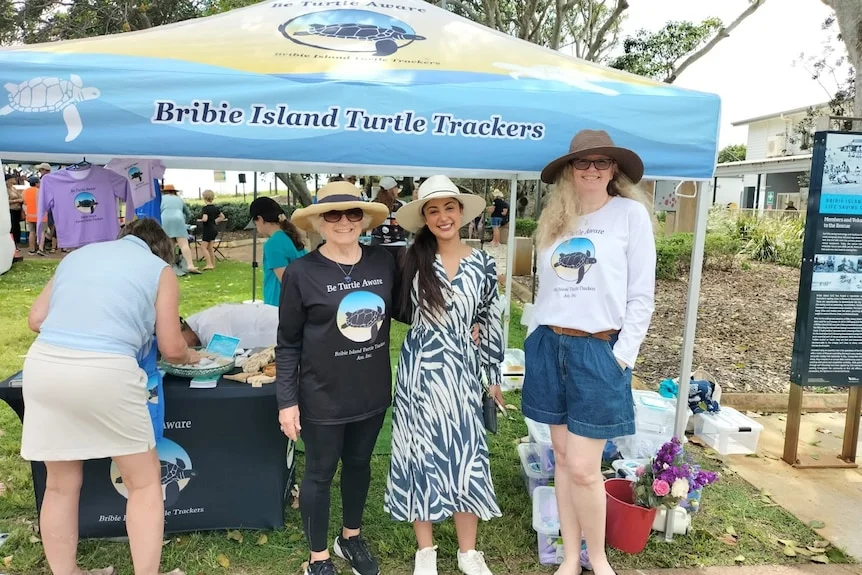
Bribie Island Turtle Trackers volunteers patrol nesting sites. The group’s John Oxenford began a petition several years ago seeking four-wheel-drive bans like those at Cable Beach in Western Australia. Bundaberg Regional Council also bans night driving at Moore Park Beach during summer.
“All we are asking for is the implementation of practices that have been implemented in other areas,” Oxenford said. In past years, he said, volunteers had moved as many as half of the nests to protect them from vehicles.
Turtle tracks cross tyre tracks on Bribie Island. Supplied: Darren Jew
Promises and a plan still to come
Oxenford said Pumicestone MP Ariana Doolan had verbally assured him that a petition with nearly 28,000 signatures would be tabled in parliament. It has not been tabled.
Doolan said Bribie’s environment was one of its “greatest assets,” and that she was committed to protecting sensitive habitats and threatened species, including marine turtles, while preserving public access.
Ms Doolan, centre, at a Bribie Island Turtle Trackers event earlier this month. Supplied
Environment Minister Andrew Powell issued a similar statement, saying the government was committed to balancing public access and enjoyment with conservation. His office said the Bribie Island Management Plan is due in early 2027.
For now, rangers remain on the island and say they take a “zero-tolerance” approach to offences. Driving without due care, or driving or parking on dunes, can carry a fine of up to $3,454. That enforcement matters, but it leaves the central issue unresolved: whether seasonal restrictions will be put in place before another nesting season is underway.